
FRANKIE is a Dream Girl
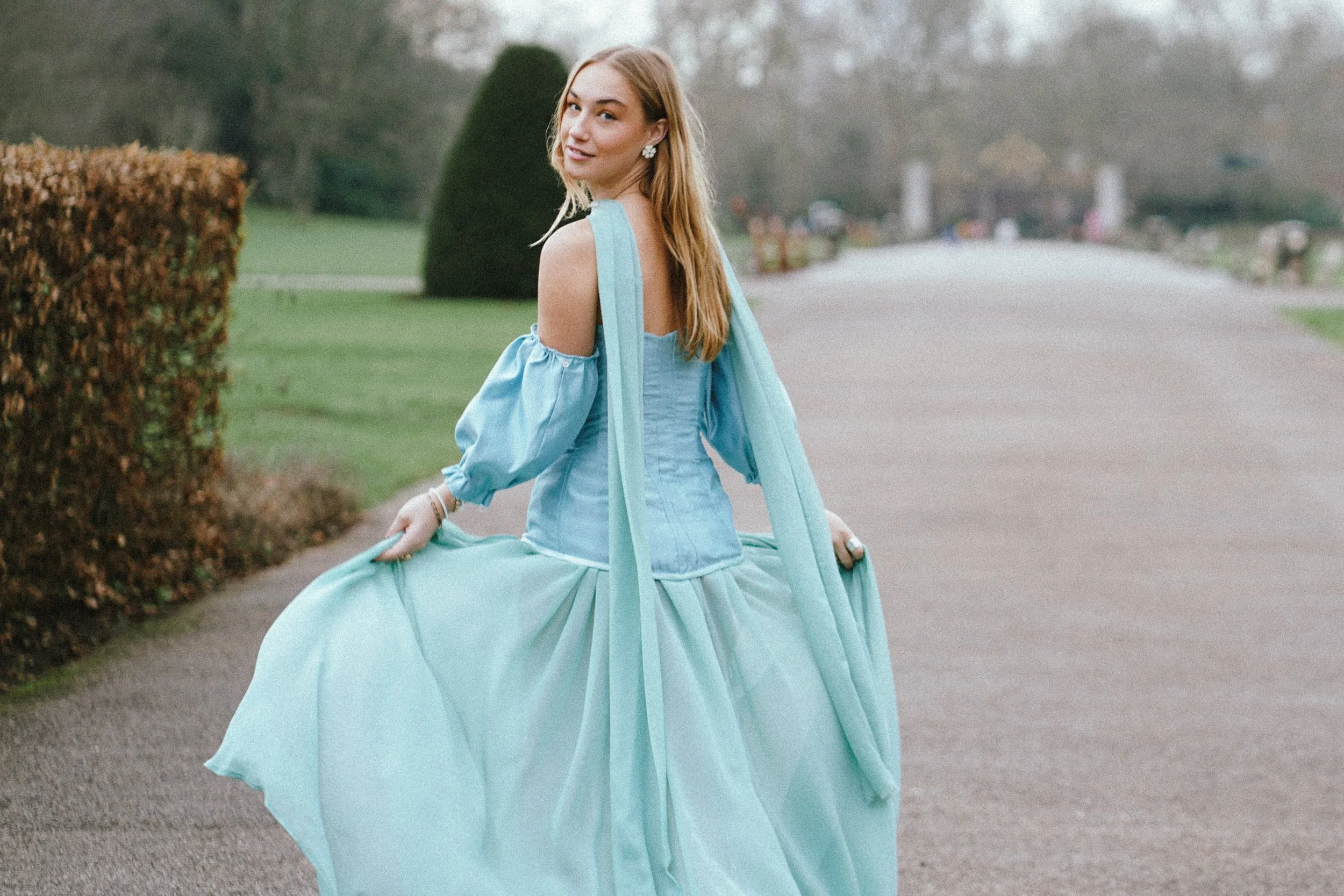
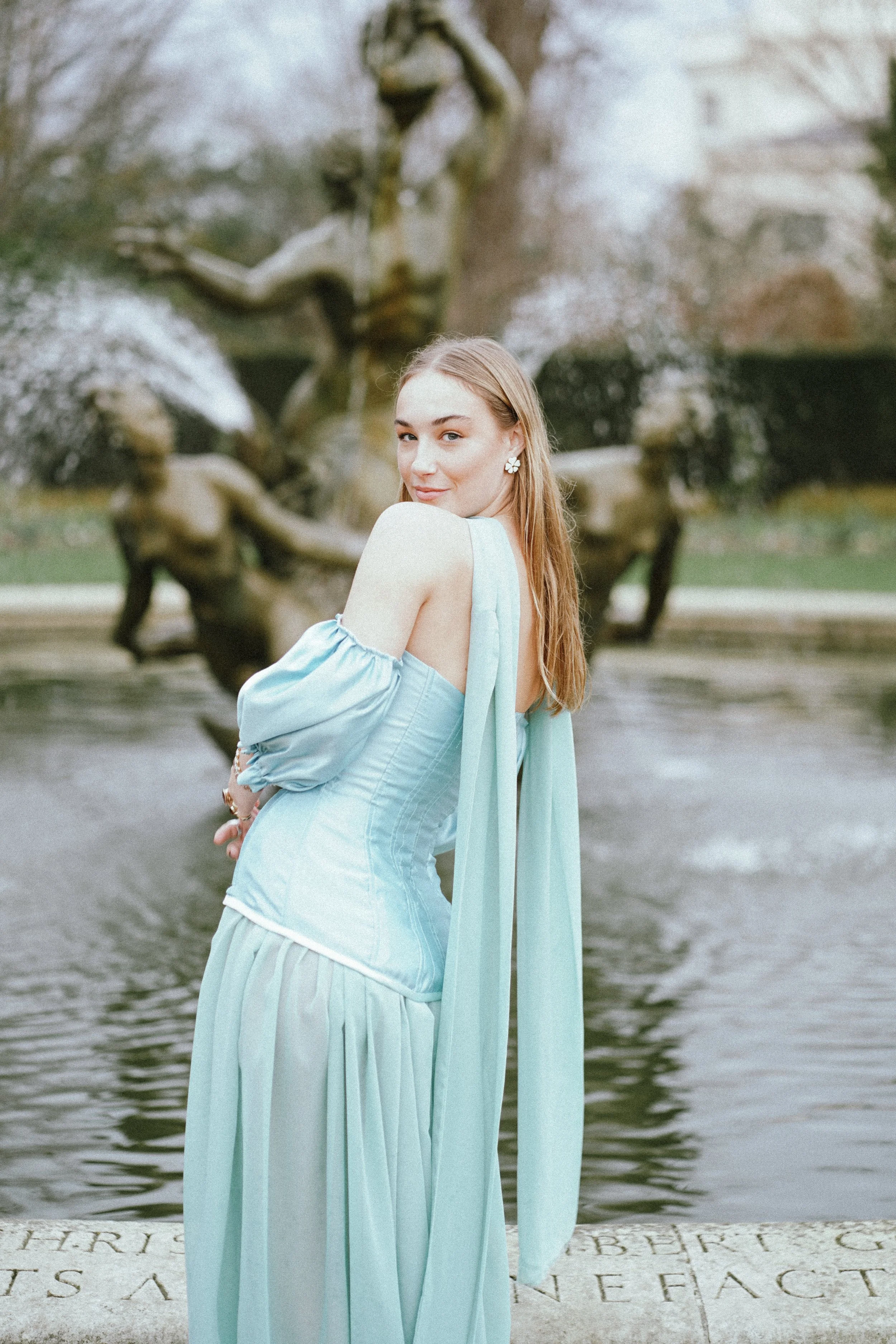
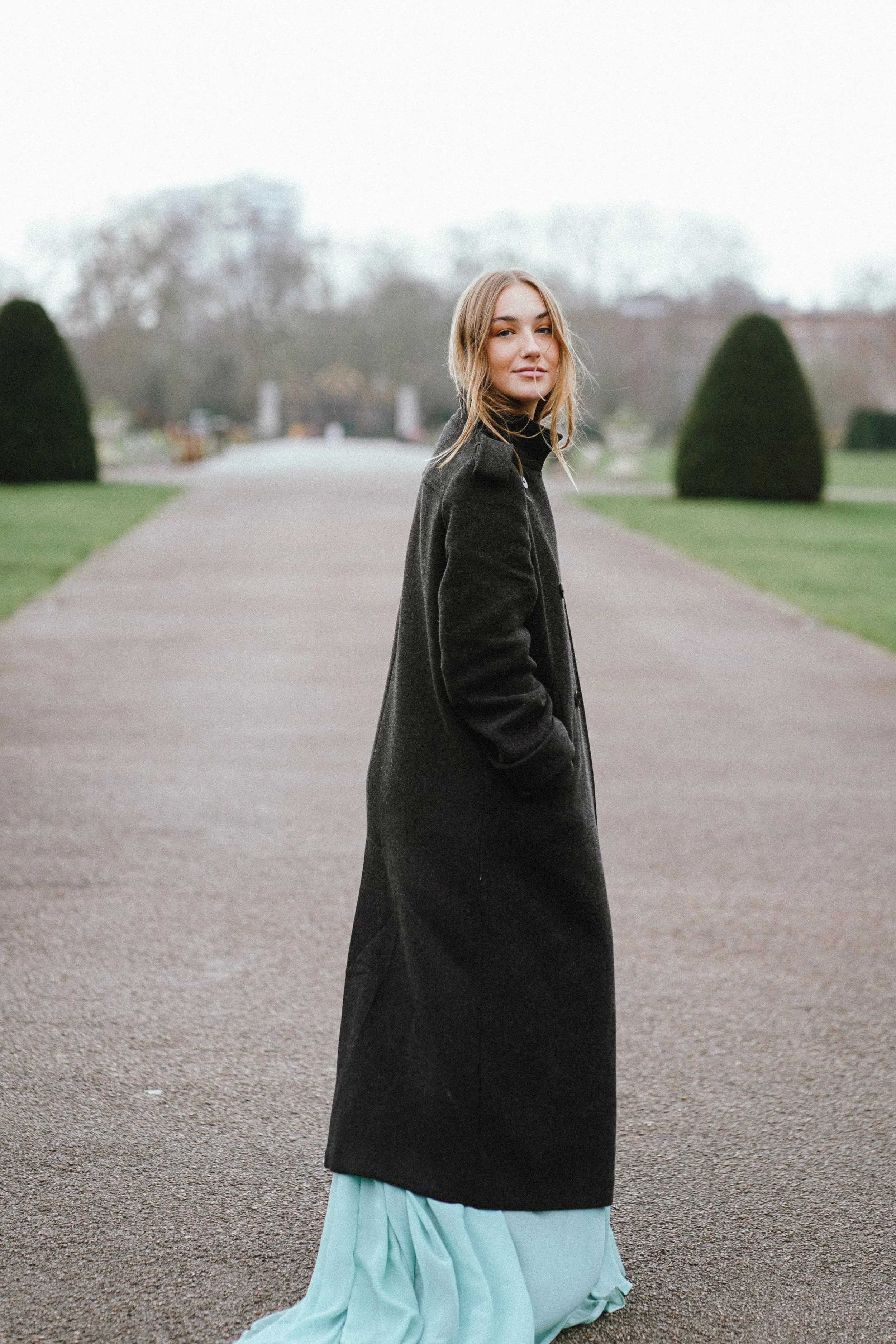
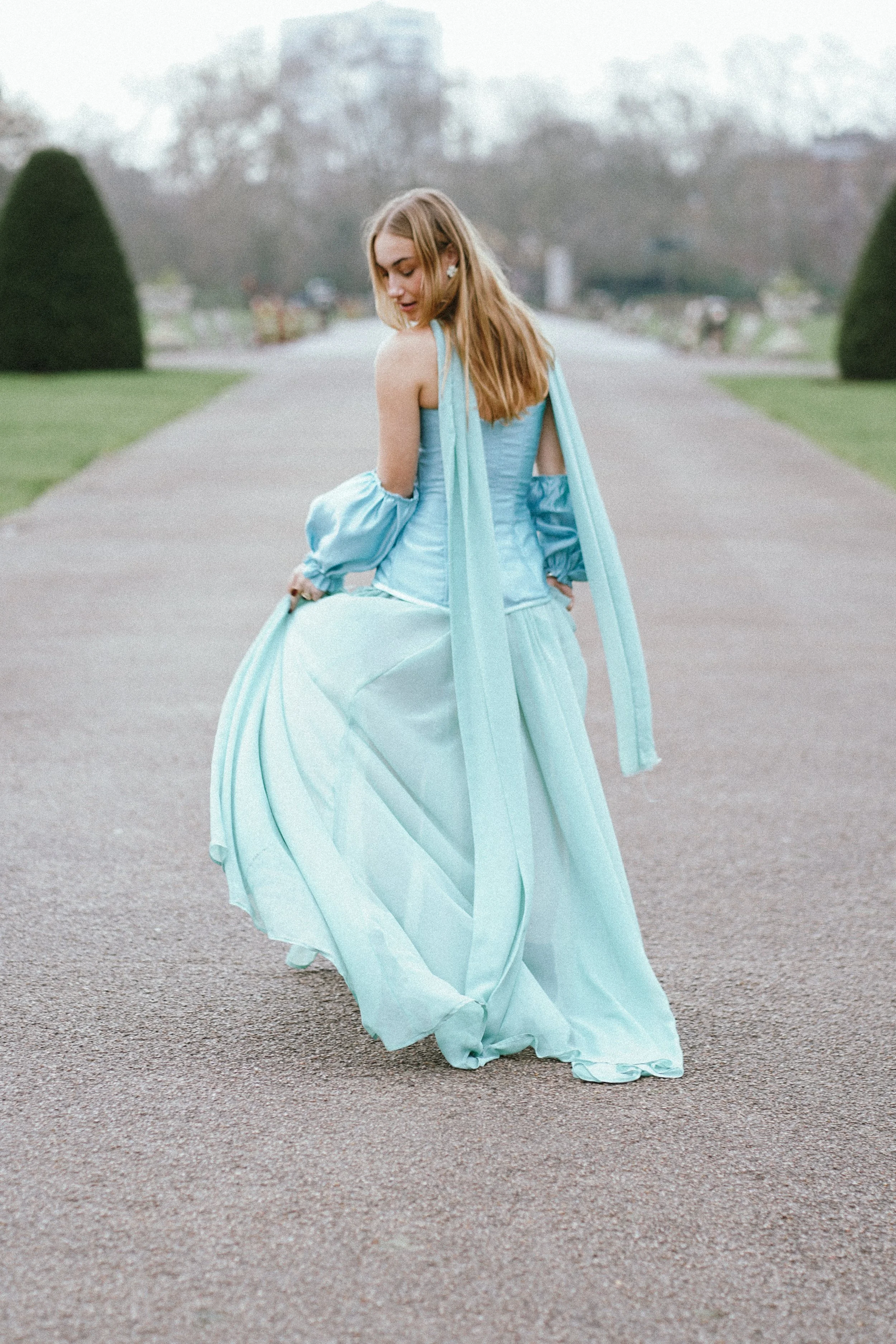
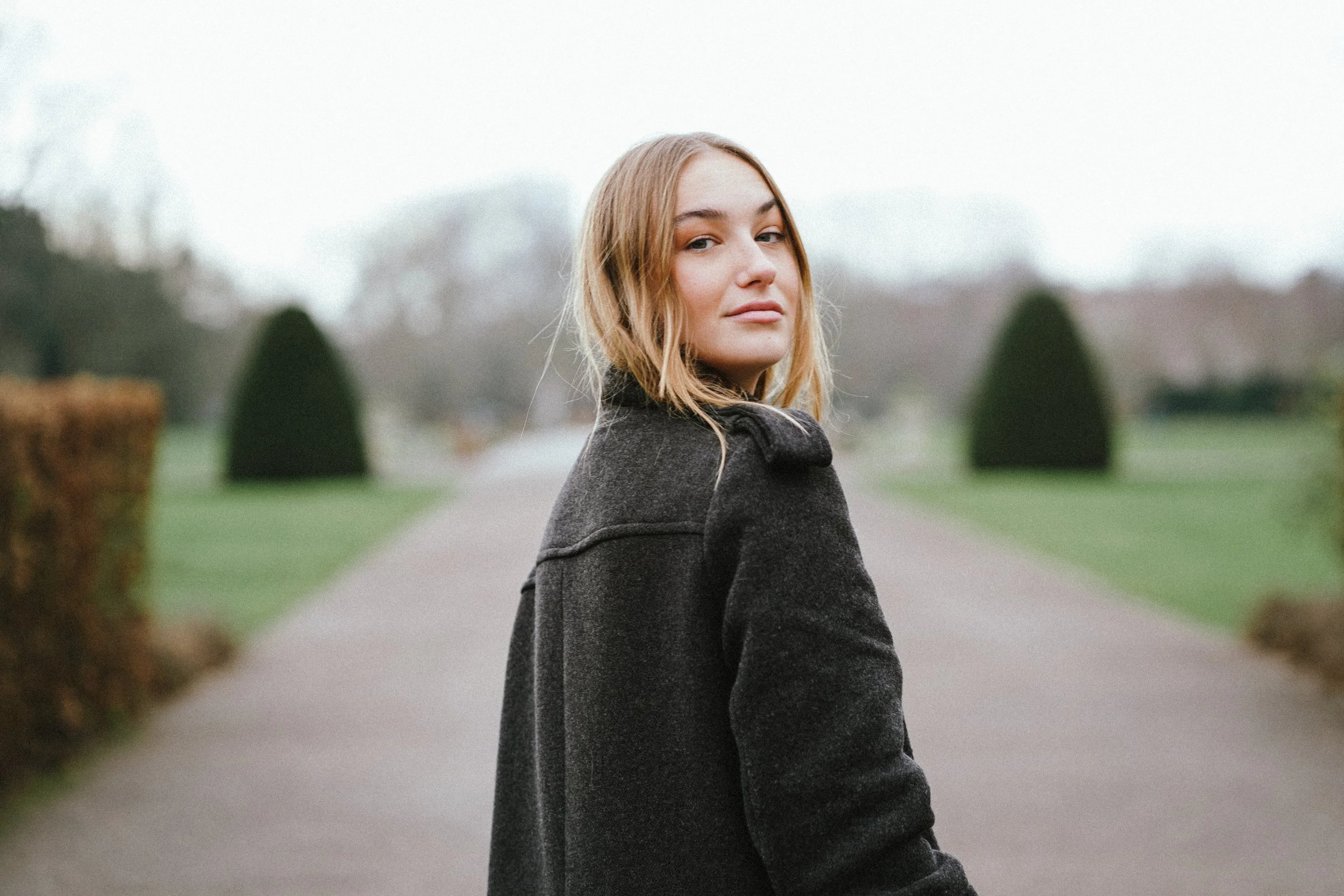
photos by @noorandhercamera, FRANKIE is wearing a dress she made herself xx
Frankie is an icon! As a London-based singer-songwriter whose music leans into emotion and vulnerability, her music is the perfect soundtrack to all the difficult moments that come with growing up.
Writing from personal experience, her songs explore the messy edges of relationships and self-discovery, and all the wonderful/horrible moments that shape you in your twenties. (Growing Pains is my personal favourite!)
She has the natural instinct for melody and storytelling, and as she puts it: “The one thing I love about it is that each song is so reflective of the person that I was at that time.” The result is a catalogue of songs that feel personal and connected, and are ones that you return to again and again.
I sat with her to talk about her upcoming release “Sick Love”, her songwriting process, what it’s like to be vulnerable through your art, and why old men in the business might not be your intended demographic.
“It's like a handhold across a headphone.”
The first question I ask everyone is if you could describe the London music scene, or your current music scene, with three words?
FRANKIE: I’ll ramble, then I'll find one… The scene that I'm in is, very much, female artists. Like, Flo Wilkes, I have a good friend called Tilly. Like those kinds of artists,, so you would think that it could be a very competitive and weird, jealous thing. Everyone's doing the same thing. But the thing that I've learned is there's space for everyone. So it's definitely supportive.
I think, because I really just like to try and surround myself with people who are just having each other's back and we're always like, “Oh my God, I'm so jealous of you”, like in the best way. Like, you inspire me. Yeah. Maybe inspired is my second one.
And then I also think she's cutthroat. That will be my third. I think, being a female artist you often walk into a space where it's a male dominated space, especially venues always run by men, often older men. And you always have to put on a good face. You'll do a gig and you'll be like, shitting yourself the whole day. And then you've got to arrive and set everything up, and you've got to be like yay, I'm so excited. All you want to do is go and cry in the corner. So it's a balance.
I think other people have different experiences, but I'm very lucky that I have great friends who inspire me. I literally go to people's shows and I'm like “I want to be doing what you're doing”. And even if I'll go to like a huge artist, I'll literally be standing there like, fuck, like, I know that's where I want to be. Yeah. And that's such a nice feeling to have.
I remember there was a stage where I didn't want to go to gigs because I literally would go and be like “I really want to be doing that, but I'm not there yet”. But now I also really recognize what strengths people have, and that's something that I've really learned. Picking your strengths and “How can you play into that?”
I love this one. What emotion do you think your music understands better than you do?
FRANKIE: I feel like my music understands me better than myself. It’s so cringe, but there's a Joan Didion quote. Which is one of my favourite authors.
“I write entirely to find out what I'm thinking, what I'm looking at, what I see, and what it means. What I want and what I fear.”
I'll write a song and I'll be like, oh, that's how I feel. I literally will write something and be like, “oh fuck”. And sometimes you're scared to write something down because you're like, okay, I don't actually want to really understand it. It's my own form of therapy. As someone who would never talk about how they feel about things, it’s so crazy that I have this one form where I'm oversharing. Like in every way. It's crazy. But yeah, it's a really communicative thing with myself. And I hope with other people too.
How has growing up shaped your sound or style?
FRANKIE: I feel like when I first was writing stuff, I wrote a very folk indie acoustic vibe. I used to produce all my own stuff, in my very early stuff. It's all produced by myself on Garageband. People always give you the advice of “Take down the old stuff. Make sure you have the best stuff on your Spotify.” And I'm like, no, it's a collage of everything I've ever made. I really like that. My early stuff produced by me, I listen to it now and I'm like, “These levels are off” but I'm so proud of myself when I wrote that.
I've now played with a band as well. So now I couldn't imagine a song without having drums in the background, whereas before I never would have done that. Sometimes, I’m very truthful when I write stuff, and sometimes I think I was more truthful when I started. Because I think the writing is better now. God, like I was really hitting the hard hit when I was like 15. Sometimes I'll go through like two months where I'm really struggling to write something, and sometimes it floats out of you. So it really ebbs and flows.
But the one thing I love about it is that each song is so reflective of that person that was at that time. I think you can hear it, like my early stuff. All my early stuff. I remember writing and blaming myself for situations, and I feel like I'm a stronger person now. It's so funny because you hear yourself so much in your early stuff. But yeah, I suppose the songs, how they sound, have changed a lot.
Then again, it comes back. I feel like recently I've been doing a lot of just guitar stuff. Trying to refine the sound, it gets a little lost along the way. So sometimes, going back to the roots of simple, stripped back songs.
I love that you keep all the old stuff up. It's nice to look back at your growth.
FRANKIE: It's so nice to look back at. I'm so proud that I produced it all. That's so cool. Like, it was all completely me. Because sometimes you work with new people and you're like, I can't really hear myself in this anymore. You work with people and that's a different change. I've just started working with other creatives, and I used to be so scared to do that. I didn't think I was good enough. Growing up and backing myself a bit more, recognizing there’s something you are good at. I can go into a room and I know that I'm a strong writer. So then again, it's nice to have people around you that are also like “It's really good stuff”. Yeah. I'm so glad.
What does vulnerability mean to you now versus when you first started writing songs?
FRANKIE: Oh my God, that's such a good question. I feel like when I first started, it was like releasing music in itself was vulnerable. “Hi, I've written something, I'm gonna put it out on the internet”, and I was writing stuff in school and I'm posting on my Instagram “Hey, I've released a song” and you think everyone in your class is like, “Who the hell does she think is?” So that in itself is so vulnerable, putting it out there.
And the one thing that's so nice, now I'm like, “This is what I do”. I hope people see that, and recognize that. And it's so nice being surrounded by creative people who are, like, “Oh my God, that's so cool”. Like, “What are you working on?” And so many people are doing the same thing, whereas I feel like when you first start out, you're vulnerable because no one else is doing that. And that's when you have the real thing of, “God, no, are these good? Like, are these okay? Can someone assure me these are fine?” Whereas now, I have so much more backing of myself.
And I would hope that the writing has remained as vulnerable as it was in the beginning, because I've always said, I'm actually a very optimistic and positive person, but my music sounds like I am not. And I don't know how it has ended up like that, but I can't write happy songs. I really struggle with them. I very rarely reach for a guitar when I'm happy. It's always when I need it, it's there. I would hope that the work has remained as truthful, vulnerable, because it always comes to me when I need it. I love sad songs. Like, my music taste is sad music or musical theatre. Those are the things that just come out of me better.
In the industry, everyone expects something different of you. How do you balance your creativity and art form with an industry that's constantly asking things of you?
FRANKIE: I think in this day and age, doing music is so “Make a song that will go viral on TikTok”. I never try to think what's the part of the song that's gonna be catchy. Also, especially with sad, emotional, songs that you’re not going to bop to. I just always try and write things that I would want to hear. If I listen to a track back and I don't feel right about it, I just wouldn't release it. I have one song that I'm planning on releasing and I listen to it all the time. Like I love it. And that's the stuff that I would release.
I don't know if that would be really popular, but it's something that I've always really connected to, those songs that people love the most. So I always just back that and support that. I think also doing live shows, as someone who sings more indie, is quite difficult because it's much harder to retain the attention of the crowd. So that's something that I really work on, I really try to be an engaging performer. I feel like having a background in drama stuff has meant that on stage, I'm quite active, which I know is one of my strengths.
So I feel like when you're singing sad stuff, I really have to play into that just to make sure that I'm still engaging to watch. Because I'm not singing bangers. But it's so funny when you play to audiences who like to listen to your music, and audiences that don't. Like, you have to learn how to play in a room of everyone over the age of 50, and they're all straight white men. You have to be able to play to those crowds, as well as play to a crowd of people that are really engaged.
Oh my God, playing to a crowd of people who are engaged and are interested, it's the best feeling ever. And like every now and then again, you'll have one of those shows and you'll be like, that's why I love this. So I'm always like, just remain true to yourself, and then hopefully those are the stuff that people will pick up.
Like you're not going to come to me if you want to get lit. Like, you're gonna come to me if you're sad, then you'd listen to my stuff. And I wonder if the theme of my music will change and will become more happy, but you never know.
How do you compare being live on stage versus being in a studio?
FRANKIE: I love being live on stage. I have a background in performance. I always wanted to be on stage in whatever capacity. And then I completely fell in love with songwriting. I learned to play the guitar and I got addicted to it. And now it's literally my therapy, like, I can't imagine not having it. I love it so much, and I love being on stage, especially when it's an audience of people that want to listen. Like, it's just the best feeling.
And when you leave, your whole body is tingling and it's just the best. It's just the most incredible feeling. Also, people that have shown up to come and support you, it’s incredible. I find sometimes just being in the studio is more difficult for me because when I started, I was producing my own stuff. And sometimes I find it difficult to be assertive of what I want and be like, "No, I like that.”
I've seen so many people that I'm inspired by literally being like “No, I like this, and like that” and I really want to become more assertive with what I want and what I don't want. And I find in the industry, sometimes that's trickier. I take things away, and sort of muse on them and then think. Studio days are weird because you get there at like 10 and then you leave at like five. You're like locked away in a room and it's a weird space. Some people love it. But it's like it really has grown on me. Like, sometimes it’s literally like my favourite day and I leave and I'm like “That was incredible”. And sometimes when you leave you're like, “Oh okay, I don't know if that was what I wanted”.
But obviously we'll work on it. I still think it's such a privilege to be in a room with someone who wants to work with you. And my producer I'm working with now is called Smithy and he's like the best person ever, and he's so patient and really gets what I want to say. It's so nice to find people like that. Because being on stage you can just react to the energy of the crowd, and I feel like I'm getting better now reacting to the studio. And like hearing the instruments in the track, and trying to deliver a live performance on a track. So I think getting that feeling in the studio is like, it's quite an art.
It's just like, it's so weird. I go to uni in the morning, get on the train to the studio, and then I'm just like, I've had the coolest day. I always think, if you had that day when you were 15 years old, you would be like, “What the hell?” Younger you would be so proud of you right now. So it was an adjustment but I feel I'm getting there, I think, so I'm proud.
What's it like working with a band?
FRANKIE: Oh, it's amazing. My band are just the best people. I have always said my strengths are lyricism and performance, but I love playing instruments. It's so funny, my first core band member is a girl called Ashton and I can't play on stage now without her. Because she's the first person that I gave a song to, and she would make all the calls and give it back to me, and I was like “That's incredible what you've done”. It's magical. And I'm gonna keep making very basic calls. I can play on my instruments, but I can't play them like you play them and I'm like, I'm so grateful that you want to.
She's at Bristol, and my bassist is at Bristol too. One of my guitarists is at Leeds, and everyone comes together and I'm like “You're sacrificing so much time to play for me. You must think I'm all right.” That's good. It's just so nice.
I kind of love a boogie on stage, even if I'm like booging to a sad song, and they're all such engaging performances. You just bring such energy to the stage. And my drummer, she's still in school, and she likes to come out on weekends. She had her first ever gig, and I'm like, that is so fucking cool. She's 17, I think, but all the venues are 18 plus. So we sneak her in and no one knows.
Everyone's so up for it and I'm like, "What are we gonna wear this gig?” Like, it's just so much fun. They just bring something new, like such a new energy. The music that I've written since having them has been so much more influenced by them now. It feels I'm always now like, “How would this sound on stage?” They are just amazing. I'll send them something the night before, and they'll learn it for the next day. They play their instruments so incredibly. I'm so in awe that people want to work with me.
I love that you get all these incredible opportunities, and you get to work with so many amazing people.
FRANKIE: It's such a privilege. It's so nice to have a support system when you're on stage. It makes gigs something to look forward to. But, I also do love doing an acoustic set with just me, because the relationship with the crowd is so intimate. It's so different.
I have my next release Sick Love. And it's going to come out in March/April. I'm watching all the stuff that comes with releasing, which is, like a hole. It's so funny, I literally wrote it two years ago. Oh my God. Then you have to produce it, and then you release it, and then you're on the release train and you can't get off. We played it at my last headline gig and my band all made parts for it, and I literally cried on stage. As soon as it becomes live and people are like “That was really good.” You're like, yeah, that was a good song. Sometimes you need to test things out on stage.
When I first started, I was like, “God, everyone's gonna think it's so cringe. Everyone's thinking I'm so obsessed with myself.” I'm writing and releasing it with my face on the front of it. But it really isn't like that, and that's really changed how I see it. Having people be like, “Oh my God, tell me about the new song” Something like this, you’ve give me an opportunity to talk about it. I don't want anyone to think that you're doing it from anything other than something that you love. That's your art form and that's how you express it.
People start to take you more seriously, and then you take yourself more seriously. Like, I remember once I played a gig, and there was a big guy in music. I had such a great time on stage, and then I came off and people were like “You have to speak to him. It's really important to speak to him. Like, he's a big guy that could really help out.”
And he said to me, “I think you have a place in the industry. I'm not sure it's as an artist, though.” I remember being like “You're 60 years old, I'm 17.” I won’t ever forget it, but you have to move on. Keep doing what you're doing. Everyone's so opinionated, you just have to let it go. You're allowed to have opinions, but when you hear them you just have to keep moving.
I'm sure people there’s girls from school like, “What the hell is she doing?” I'm sure there's a lot of that. But I just luckily don't have people around me saying that.
Maybe sixty year old men aren't your intended demographic.
FRANKIE: It's important to focus on that, that's exactly the thing. I have a great little fan group of people that come to my gigs, and when I see them in the crowd, I'm like, I do this for you. You're my demographic, you're people I want to play to. You have to be able to play to the sixty year old men that are going to say you're not that good, but that's just how it goes.
What do you hope listeners feel when they're listening to your music? What do you hope they take away from it?
FRANKIE: That's such a good question. I always make you so emotional, the first thought of anyone listening to my songs. I always have felt that, as I said, music gives me words or things I didn’t know I wanted to say. And listening to other people I've been like, that's exactly how I felt. And you just just wrote it down, put it in a song. That's literally everything.
And I hope that people listen to me and are like, "Oh, my God, I feel that way too." Also just enjoy it and take something from it. Feeling a little bit less alone. I'm a big lyrics fan, the lyrics are the heart of my work. When I listen to music, I listen to what they’re saying. That comes from doing an English degree. But that's what I take from something. So I just hope that someone is listening to the words. And even if you don't listen and you just like to enjoy the vibe of the song, I'm just like, literally the fact that people listen.
But young listeners as well, because I started writing when I was so young and I just hope they look up to it and that's like, that's how I feel. There's someone else who has been through that, no matter whatever sense it is. Whether it's like, my friend was mean to me or I miss my mom. Just like any feeling. And even it's not exactly what I'm saying, there's something in there like, “Oh my God, thank you for saying that.”
It can be so emotional, some of the people that do come to my shows. I can see them crying in the audience. And I'm just like, yes, I know it's so tough, but we're doing it together. And that's what's so nice about playing things live as well, because it's like, it's a communal experience. It's like a handhold across a headphone.
Do you have a favourite lyric you've written that resonates with you still?
FRANKIE: Like, literally every part of Growing Pains. Like, that whole song. I'm still all these things. I listen to them now and I'm like, yeah, I'm still all those things. But it's like a different format. That's so yourself. And then the song I have coming out called Sick Love is kind of the same of like, every lyric is exactly how I feel. Like the first lyric of the song is “If I got to love you, then I couldn't love me.” And Sick Love is similar to Growing Pains, like a big building outro. I'm so excited for it to come out.
I haven't released anything since Dream Boy, which was my last single, which was in March of last year. And these songs are now coming out and they're all part of the Dream Boy world. As I said, it's so difficult. Like, uni and doing shows and everything. You get so lost in things. And then I will go to a friend's gig or something, and I’ll get back on track. That's what you want.
And there's actually Taylor Swift. I'm a big Swifty. And she says in her most recent documentary, which I found so inspiring. She was like, “Everyone wants to be where you are, but no one wants to do the work, it takes to get you there”. And I'm like, that is so true. There's so much that goes on behind the scenes. Like, in the first place, you have to experience the thing, which can be the worst thing ever. And then you've got to write about it, and then you've got to edit the song a bit, and then you produce it, and then you release it, and then it's a whole thing. You've just got to keep on track and keep yourself motivated.
There's also a song on this project called Half of It, which tells the story of how it all fell out. And then Sick Love is after it all. But I love those self reflective songs where it's like, okay, when it's all died down, like, “How you really feel?” And I feel like Sick Love coming out is like, okay, now everything's going on, you're no longer in contact with this person. Like, “How do you feel about this?” And, like, the whole point isn’t “Thank you for everything.” It wasn’t like, it was awful, but I appreciate the growth. I'm like, no, that was horrid.
And I think sometimes that's so fine. Because I feel like people always have the tendency to rationalize things, and I'm like, no, that was fucked up. Here's how I feel about it. You're not getting away with this kind of vibe.
Do you imagine your songs as scenes or is it an atmosphere?
FRANKIE: I've always liked seeing them as scenes. It's different with the song. Like Dream Boy. I have to say Smithy, the guy who produced that song, who did Sick Love and Half of It as well. That song is all actually down to him. Because I wrote that song and I was like, I don't think it's that good. I don't think anyone's going to like it, It's just like one more I'm going to put in the bank and was never going to play. I sent a couple of songs when we first worked together and he was like, “That is such a cool song”. And I was like, that's so interesting because I never would have gone for that one. And then he made it into this song that I was like, “Oh my God, that's like everything I wanted.” And that one is like a film to me.
People always like to talk about seeing things in terms of colours for songs. And I've never really thought about things like that. I think more of like “Where am I when I'm singing this?” Like, Growing Pains, you’re kind of in your room, by the piano. Whereas Dream Boy, I'm like, I'm talking to a crowd, I'm with everyone. Sick Love, I feel like I'm talking to the person.
I find it more difficult to conceptualize a project, like “What do you want the colours to be?” And I've always found that trickier to create. Because I've always been like, well, I'm usually in my room by myself when I do this. Like, how can I make this into a world? But with this new project, like, it's actually come really easily. The colour for everything's blue. Like, everything feels so blue to me, which is so funny because I've never had that.
I lived in New York for a while and it's all about my time in this situation. Which is like two years ago, and I'm releasing the songs now. It’s so funny because I think people hear them and are like, “Oh my God, she's still hung up on that?” But it's just I wrote these songs two years ago and they're coming out now. That is how the cookie crumbles. That's just how it works.
I think when you think about music videos or things, you really picture them. Half of It… it tells a story like leaving a night out and being in someone's apartment. I see the whole progression. It's always like the hard truth, like I can only write things that are like what exactly happens. I picture it exactly how it all moved in that time.
This new project is based in New York. I don't know if this is too secret or not, but the project's called Thompson Street, which is where this person lived. It's all based around that place. The visuals are very dream-like, because that's kind of the vibe, but there's an industrial backdrop because we're in New York, like it's a bit more gritty. So I feel like that project is very much rooted in that one location. Which is so interesting. I'm so excited for a couple to come out because I feel like it’s the first time I've released something that feels so me, because I always say this project was the one time where I needed writing the most.
New York is so cool!
FRANKIE: I actually was doing a journalism thing. A New York Times program. I did that, and then I met some great people, lived in New York, became involved with someone. Which was a little bit fun at the time. New York is my favourite, I want to move back there. Like after uni I'm just like, how do I get back to New York? I just love it. I feel so myself when I'm there.
And I think you can hear that and the songs, I think they feel so myself. I think they're my best writing. I think Growing Pants is probably one of my best written songs as well. And I think it always will be, 'cause it's just, like, so uniquely me. I feel they're all connected, and it's like, this is a world building thing. And it's so fun to do that.
I have some really great people who are working on the projects with me, like, Lizzie. She's like my creative director. She's helping me with like the creative vision for everything. And it's like the first time I've really been like, let's build the world. Do it justice. I want to do the music videos, I want to get everything done and sorted and have everything prepared because I want to do these songs that justice.
Moving on to rapid fire ones… are there any artists that influence you or that you look up to for inspiration?
FRANKIE: Grace Abrams, she was my definition of “Do I want to be her or be with her?” Like I love her so much, she's my everything. I think her music has been such a big inspiration for me. I saw her first ever London show, and there were like 200 people, and she was the first where I was like, that's exactly how I feel, like, what you've just said there.
Lorde, Melodrama, it's my favourite album of all time. I love it. It's so good, the lyricism and the way it's written. I just love everything about it. Joni Mitchell… I'm a pop girl. And then I love Adrianne Lenkar. Huge fan. Taylor Swift as an artist is so cool.
How would you describe your sound?
FRANKIE: I always say lyrics first. If I ever write anything in like poetry, like stream of conscience, poetry gets put to music. So, like, everything is lyrics at the centre. And I always think quite dreamy like… I think my simpler songs are ones that say the most I want to say. My sound is my writing. She's my most important bit of everything.
Next big milestone that you'd like to aim for?
FRANKIE: This project, but I would love to play a festival in summer. But it's very intense. I've applied for the last three years and never got anything. It's such a crowded market, and I don't think it's difficult to play sad, reflective songs at a big festival. I don't know how much that would translate, and that would be an absolute dream.
I would love to get a BBC Radio 1 play. I've had a couple of BBC Introducing. When you hear yourself on the radio, it’s literally the most… Growing Pains was put on the radio, and me and my mom and dad sat there just like crying all of us. You hear yourself, and it's this real experience. And also Spotify playlists, the dream. It’s so funny, Landline, which is still my biggest song release ever, was playing on a Spotify playlist. And that was produced by myself. I just released it and it did incredibly well. But I would love for Sick Love to get that. I'm gonna hopefully do a release show.
I had this one friend, she's a singer as well. And she was like, it's so funny, people ask you, “What do you want to do with your music?” She's like, obviously, like, global domination. And I was like, yeah, well, the plan is global domination.
I really admire artists like Olivia Dean and Raye, like they worked for years. Sabrina Carpenter released like eight albums before she took off. I think it's annoying when you're like, I really want to be there, but actually going slowly and getting gradual progress is so important. But I think it's important to say goals, I don't do that enough, so I'm like, glad you asked that question.
My dream is to be in a shop and hear my song. Like, can you imagine walking around a shop or like just sitting in the car and the radio comes on while your songs's playing? That randomly would be so cool. That would be super cool.
Which of your songs do you play for someone hearing your music for the first time?
FRANKIE: Dream Boy. Cause I feel like it's a fun one. I feel like it's one that most people can like. Also, in terms of how it's produced, it's the strongest production wise. And then I would say, Growing Pains or Landline are my next two because they're my faves.
Where do you usually write? Bedroom, voice memo, studio?
FRANKIE: Bedroom, yeah. Everyone says, “How's your process?” Like, do I write lyrics first and then you write the music and then you put them together? But, everything to me comes at the same time.
Sometimes I look at my notes app. I have like hundreds, I think, on the same page about lyric inspiration. And I'll put things I read in there, or things I'll think of when I'm walking around. I'll speak it into my voice memos so I've got clips. But in terms of writing, it's always like, in my room by myself. I've actually never written in the studio before, because now I always go to the studio with a song and then we produce it. But that's something I would love to try, like, growing something with the producer. It would be a really cool thing.
Finish the sentence “I'm most excited about…”
FRANKIE: I'm most excited about my new release. I'm so excited about it. I'm just so proud of it. I have this concept, and Lizzie, my creative director helped me out. And it's literally a table like this, but no one's sitting on the other side, and it's me telling a story. In a big, wide industrial room in New York. It's very simple and more conceptual than a video.
If you weren't making music, what would you be doing instead?
FRANKIE: I would be doing anything creative. A journalism thing, or I love fashion. Like, fashion journalism. But I think if I wasn't doing music, I would be sewing my tits off. And I make loads of my things I wear. I would say acting, but that's kind of linked to music and performance. It would be creative.
Finally, where do you see yourself in a year?
FRANKIE: I hope all the songs are out. I hope I've done a good show, and I hope that there's just more people listening and connecting to it more. I don't think I would want to just blow up overnight. I would obviously be so grateful, but I hope everything's come out and I'm onto new stuff. I'm so excited for stuff to come out, and I'm in such a different place than I was. I was always very emotionally all over the place, and I'm actually in a very stable relationship now, which is so rare for me. I hope in a year that my music reflects that.
And I'm working with the new people, and I’m able to actually do it all the time. I think it's difficult with uni because you have all these different things to do at the same time. But I hope I can focus on it, just because other things have fallen away a little bit.
That's all for me. Thank you so much for answering.
FRANKIE: Thank you so much for asking. I talk really fast too, so it's like watching James Charles growing up.
