Challenging Narratives in South Asian Films (Permanent Guest at TIFF)
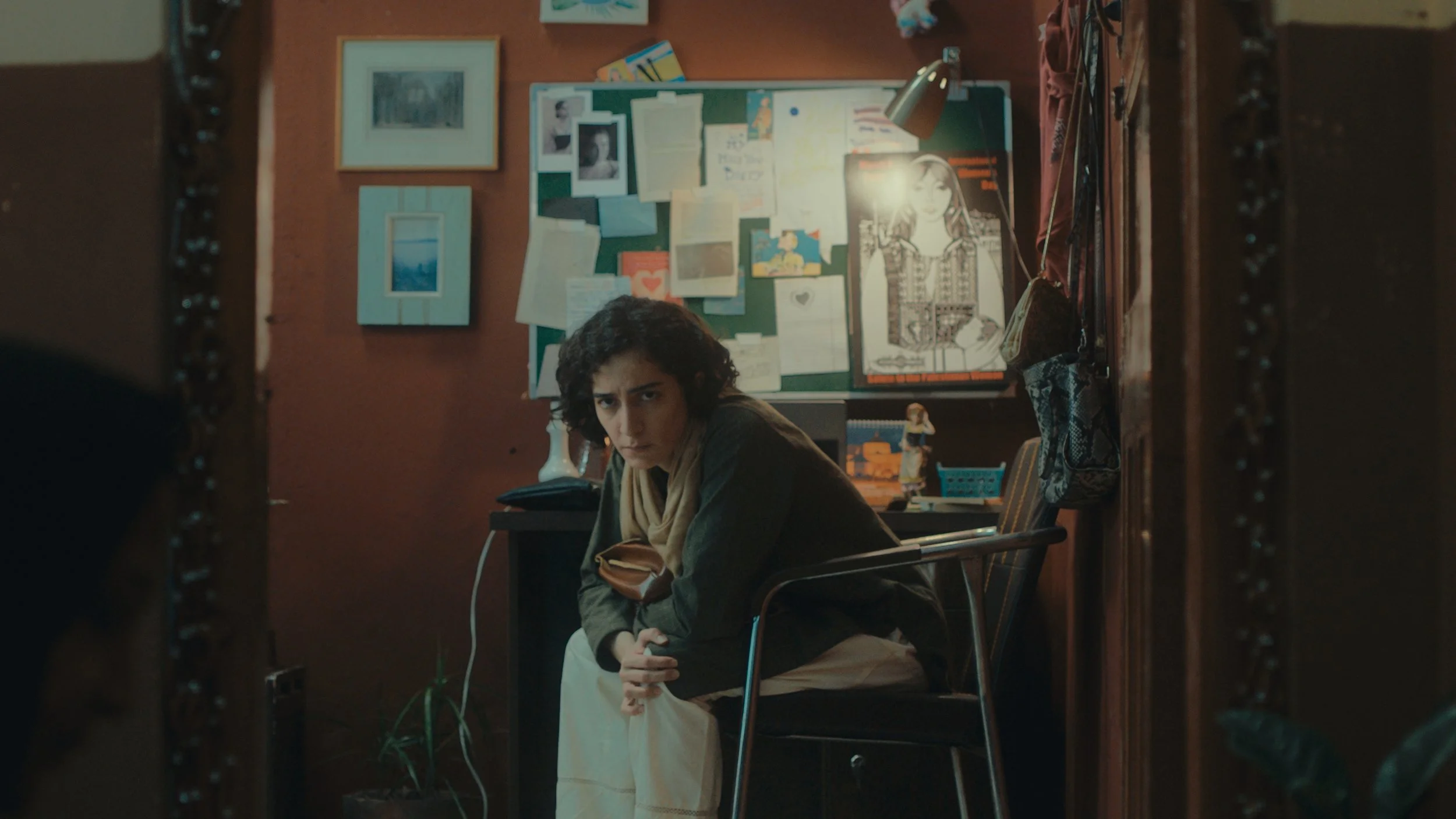
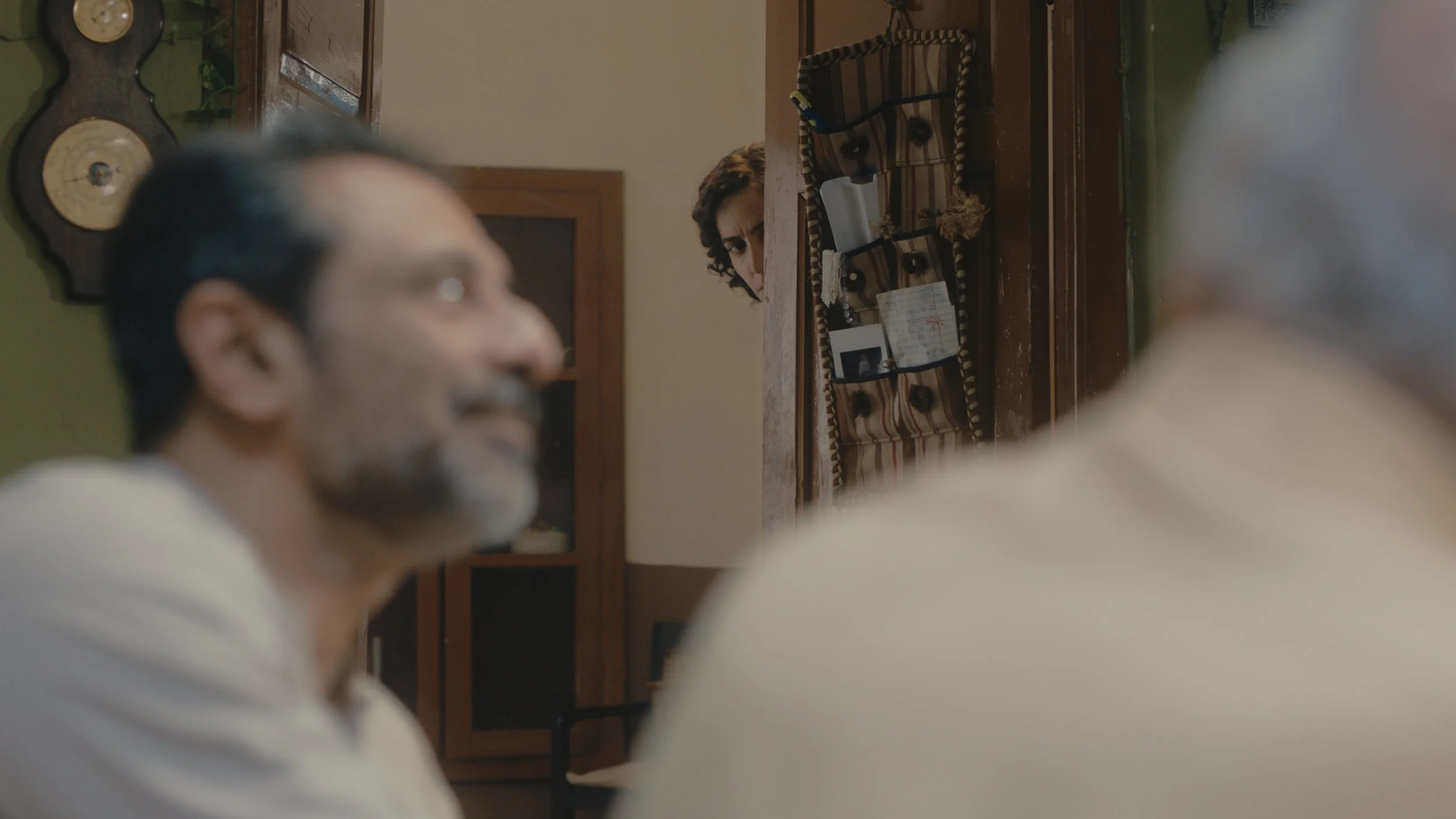
In Lahore, 26-year-old Fatin and her mother Yasmeen prepare for a neighborhood wedding when Yasmeen’s 70-year-old brother-in-law, Shabeer, unexpectedly arrives for the wedding and medical tests. Fatin, uncomfortable due to past abuse, faces pressure to care for him, including driving him to his appointments, forcing her to confront unresolved trauma while balancing family obligations.
Premiering at the Toronto International Film Festival, Permanent Guest is an impactful short film that focuses on what is not said as much as in what is shown. Set within a South Asian household, the film explores trauma and silence, through the intimate lens of a mother - daughter relationship. Rather than offering an easy delivery, the film invites the audience into discomfort, asking them to sit with the weight of unseen consequences in this family.
TIFF has long been an important platform for films that challenge dominant narratives and elevate underrepresented voices, and Permanent Guest is a welcome addition. Its selection marks a significant moment not only for Pakistani and South Asian cinema, but for storytelling that centres on women’s lives with honesty.
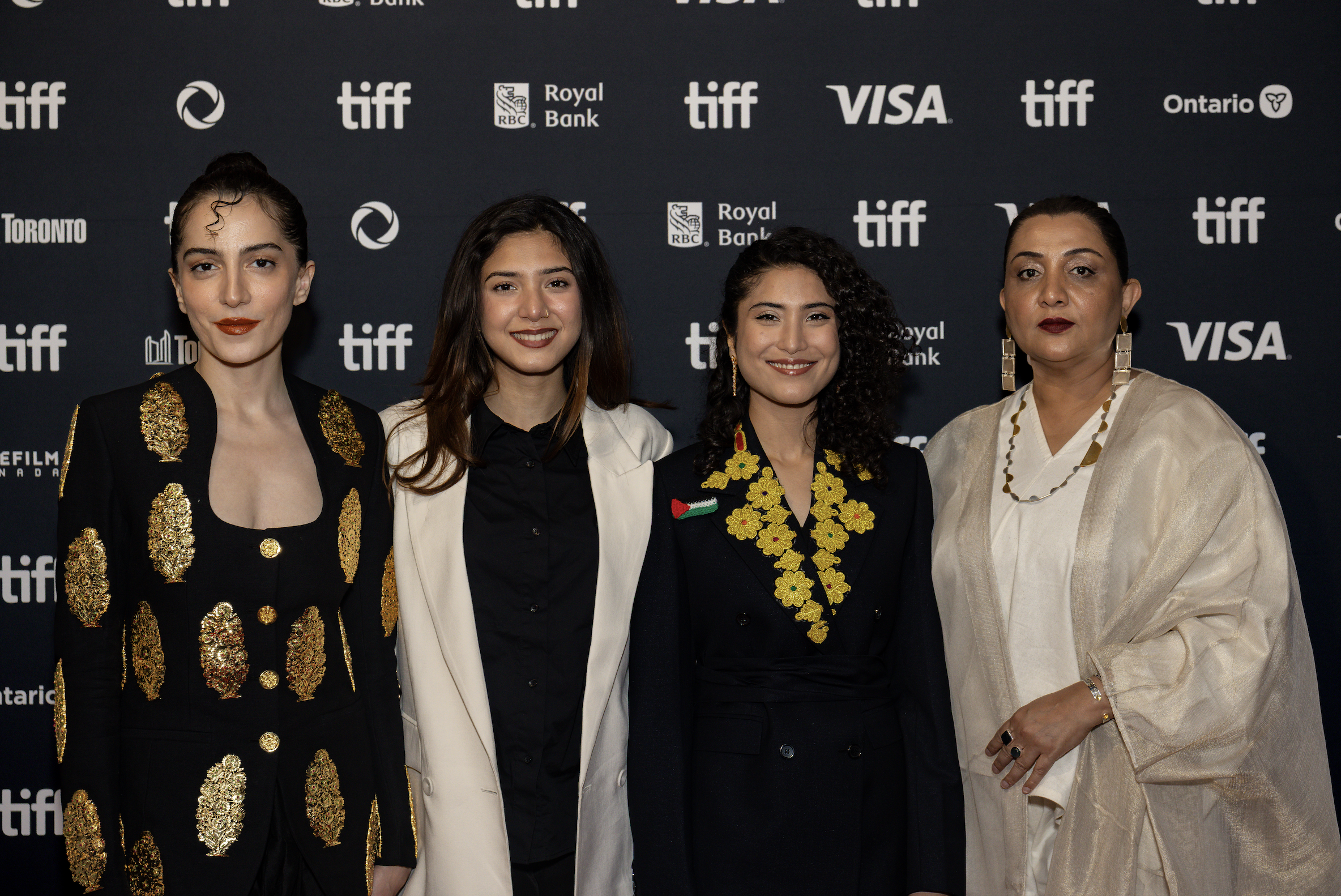
Before the film’s premiere at TIFF, we spoke with director Sana Jafri, and actors Rasti Farooq and Nadia Afgan about what it means to tell a story that challenges typical South Asian films, and tells a relevant, moving story.
How have you been enjoying this festival so far?
Sana: Honestly, we obviously weren't expecting a selection, because the ratio of selections of Pakistani films, and especially South Asian films, is very, very low. So super thrilled. And yeah, excited, nervous. Rasti has not seen the film, so she’ll watch it for the first time tomorrow. I'm actually excited to see how my team likes the film.
How does it feel to be premiering it at a festival like TIFF?
Rasti: It's always an incredible experience watching it on the big screen. For the first time, obviously, you don't see the film, you just see random things, and then random things stay with you, but it's always just very thrilling watching it with everybody.
The film explores such a heavy topic, but also what's left unsaid. How did you approach telling this story through atmosphere and silence?
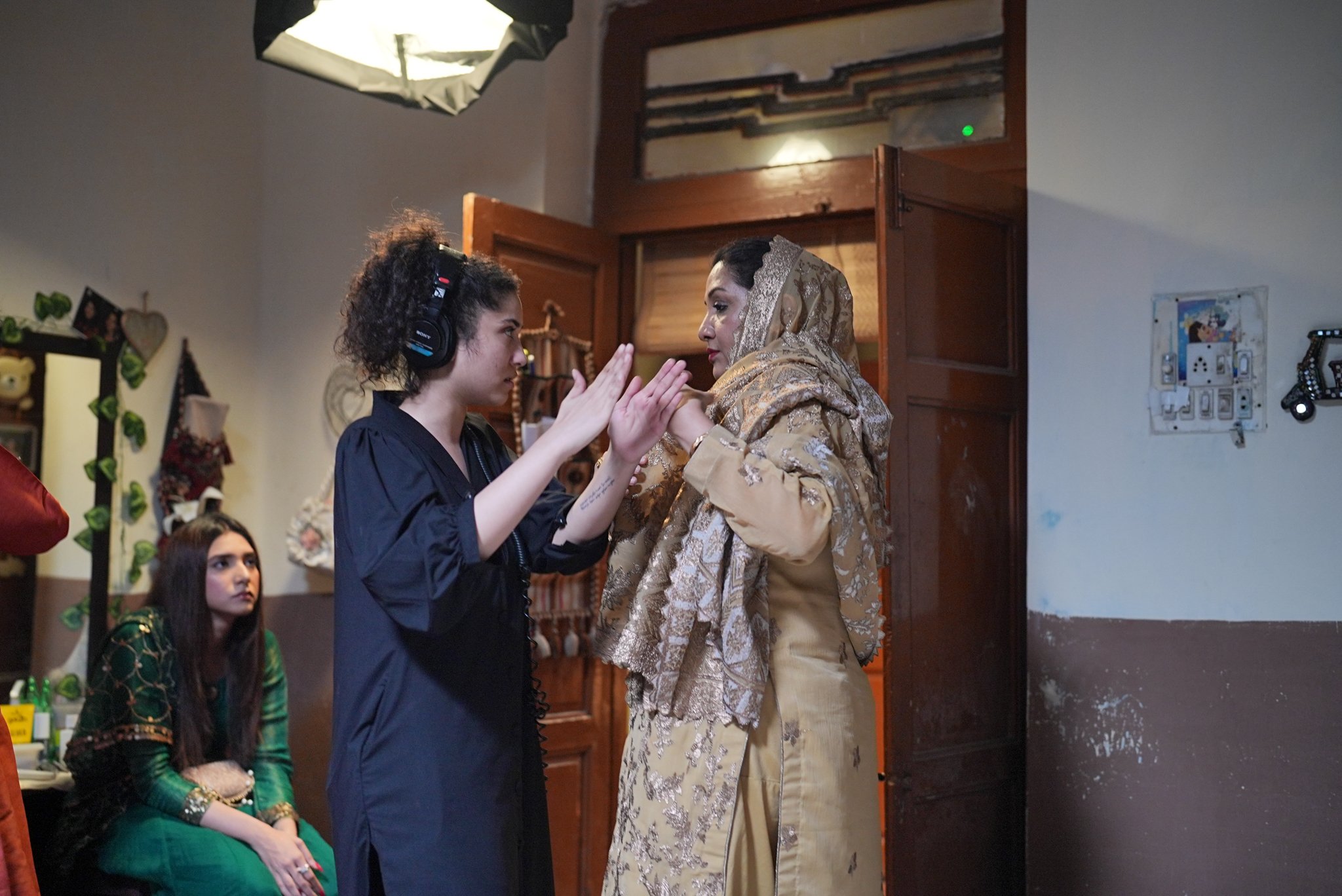
Sana: For me, that was the biggest challenge, because oftentimes the internal lives of women, especially mother-daughter relationships, there's so many things that we don't talk about, but we're showing that through our angst and our actions. When I sent the first draft, people kept saying nothing is actually really happening, that the protagonist needs to react more so the audience can understand. But I wanted to stay true to what these women would actually do in that moment. I didn't want to put in dialogue that says too much, and I knew that the collaborators that come on board, be it my cinematographer, my actors, you know, so we had like, long conversation in workshops about who the characters are and what their dynamics are, and then these guys just basically made it happen.
That vision really shines, it’s a gorgeous film! Rasti and Nadia, what drew you to the project?
Rasti: Sana pitched the idea to me in a café last year. What excited me was that the antagonist isn't revealed for the longest time, and there's a lot of what's unsaid. The story almost makes you irritated at this girl at first, and there's no exposition whatsoever. I thought that was such smart storytelling, especially for a short film. I thought that was so brave, and I thought that was spectacular, and it was just exciting as an actor to play Fatin because, yeah, she can almost come across as rough edged. I trust Sana completely. I've worked with her so many times before. She's one of the hardest working people I know. And when she's on set, she isn't just doing her job, she's doing four and a half other people's jobs. I knew everybody would bring what the script demands, which is a very light touch. Preparation was conversations, rehearsals, and working with Nadia was incredible. The kitchen scene was just incredible to do with her.
Nadia: I've been acting on TV for 26 years. When Sana told me about this short, I grabbed it with both my hands because actors in our country just get run-of-the-mill characters. I've seen this one (Sana) grow, like grow. Like I've seen her when she was just like a casting director. She was an AD. She was doing makeup. She was doing everything from wardrobe and then I've seen her grow into this phenomenal, amazing writer, director. And, you know, when I went to her set, I was so impressed with everything. Being on her set was the calmest, most chill set ever, even though the story was so intense. Playing this character gave me the opportunity to be in my mother's shoes. It was very difficult, but it gave me an understanding of what it was for my mother. I said to her, like, Sana, we aren't showing anything. Nothing is happening. But when I saw it, like two days back. And thank God I did, because if I had seen it with everybody on set, I would have broken down. When I saw the film, it made me so uncomfortable, and I messaged her and said that not saying everything, yet saying everything, makes it so unlike anything I've ever seen. I hope whoever watches it feels this uncomfortable.
Sana: And I want to add to what Nadia said, that when we were doing workshops and talking about the story and the script, you know, we did keep talking about how survivors, like ourselves, have lived in discomfort all our lives to be able to make others around us feel comfortable. And for me, that was kind of like the heart of the film where I want to create this discomfort that, you know, survivors live through all their lives, until they're old. Like I've seen, you know, my aunts and, you know, women who are in their 50s, 60s still carrying the weight of, you know, what they've been through in silence. So I think for, you know, just having Nadia on board and Rasti on board and them getting it, you know, what we're doing just really made this what it was.
The mother-daughter relationship feels central to the film.
Sana: The mother-daughter dynamic was the most important part. I wanted to explore what mother-daughter relationships could be if the patriarchal structure did not exist, and how that transforms once external forces come in. We all know we're performing to uphold some kind of status quo, and we've all had difficult relationships with our mothers, so that was something we could all resonate with.
Rasti: In patriarchal households, it feels like there's just one chair at the table. Only one woman gets validation from the male figure. Fatin is her father's favourite, and that unspoken dynamic affects her relationship with her mother. There's so much love, but also anger and disappointment. There was a lot of, like, anger, and Fatin's anger in particular that we spoke about. And, like, you know, whenever we're in these kinds of moments when our beloved family members let us down, what that feels like and how you never know what to do with it. You know? The kitchen scene felt like daggers. We rehearsed the blocking, but emotionally it happened live, and that tension stayed intact.
Sana: And funnily enough, I'm just remembering this. So there were only three takes and it was all a one shot.
Rasti: Yeah, like the kebabs had to be fried, the tea had to be made. The biscuits had to be gone. The ketchup. So it's like a whole thing as Fatin. It was like a dance. You had to remember what we were doing, all the steps were also the tension and the anger between us, and it was spilling the tea, like the oil was spilling everywhere. We were spilling everywhere. It was incredible. It was so much fun.
Nadia: My process is simple. When I hear the word action, I just do what I feel at that moment. I followed Sana's lead. I didn't overthink it. So, you know, when you worked for such a long time on TV, you kind of also have a method to it, which I can't get rid of, but I kind of like do what I think is how my mother would have done it if I was in my mother's place, if I was the daughter, you know, if I was playing Rasti's character.
How did you navigate telling such a culturally specific story for an international audience?
Sana: I think that is one of the main reasons why I wanted to tell that story, because the way I have seen these stories being told, where, I mean, I've been writing a feature length for about two years and I've been to a couple of residencies with it. And this short actually comes from that feature. People kept telling me the character needed to be more aggressive, that international audiences wouldn't understand the silence. But silence is our reality. And they want to see us, you know, South Asian women or oppressed women a certain way. They want to tell us how, you know, what oppression should look like for us and how we should react to it. And I often wonder, like, that's not like, I, you know, we've all been in so many situations where we have faced abuse and have been in uncomfortable positions, where, you know, in positions where we've had to stay silent when we literally want to scream and break stuff around us. I've never really seen that portrayed. It was a risk, but I needed to stay true to the characters and what they're feeling in that moment.
Is there a moment that stays with you?
Rasti: The biscuits. We're in the middle of the scene, Nadia's about to leave, we’re rolling, and I was like, you know what? Okay, so let's just throw it on the tray. So I just threw it on the tray each and every time. It's not some big rebellion. Awakening is a slow and painful process, made up of small moments.
Nadia: I love the whole film so much. The sugarcane juice scene stayed with me. When the uncle falls and grabs her, it says so much. I think it would be one scene that whoever watches it will, they'll have to interpret their own emotion and they will have to, you know, reflect on it in their own way. And the last scene, where men fill the frame again, life moves on. It made me so uncomfortable, and that's why it's powerful.
Rasti: A surprising scene when we were shooting that I did not think I would feel so sad about was when we were shooting it. I felt deeply sad after the hospital, after the car, after the sugarcane juice, she came back to her father's in the back balcony. Fatin is walking up and he's just like, oh, my lovely daughter is back. My brother is back. Everything worked out, my brother is healthy, and he's so oblivious in this scene, and I felt so, I felt so sick in my stomach for Fatin. And for all of us, because we've played Fatin, but it was just like, you know, your father is in complete and utter oblivion. And your parents generally, but just this, they don't know anything. And they don't want to know. Yeah, I had a lot of conversations with Adil about this, the father's character and he's also like a veteran Pakistani actor. Huge, huge. And obviously it was a super small role for him, but he read the script and he was like, I just want to do it because I want to make this film happen. So, we spoke a lot about the character because I was like, you're not the bad guy. You really are not.
To close, what do you hope audiences take away?
Sana: People ask me, why wouldn't she say something? And my question back is, why have you created a world for us where we can't? Why have you created this society for us, where we're now in our 40s, 50s, 60s, and we still don't feel like we can talk about certain things.The people who are asking me, they're like, that it is insane that she wouldn't stand up for herself if this happened to her. And I'm like, yes, absolutely. It is insane and it's ridiculous, but that is 99.9% of the women who have been through this.
Rasti: I wouldn't want to simplify the story. I hope people think about families, how much love there is, and yet how much we avoid real conversations. Like, parents are so ill-equipped to handle these conversations. They don't know what to say. And kids just don't trust their parents to have the perfect conversation. So we just never talk. And it's just so tragic. It's so awful. And I would say parents and kids both. Like they all find themselves more and more isolated.
Nadia: Any relationship, whether it's father-daughter, mother-daughter, or siblings, especially in Asian families, we kind of have a script already written. A father is going to be a certain way, a mother is going to be a certain way, daughters will be a certain way, sons will be like that. Patriarchy, how mothers will mother, how fathers will father, everybody has a role. There are so many stories that need to be told and conversations that people need to have. What she has done in her own way is so incredible, and it will spark so many conversations, whoever watches it, audiences here, in South Asia, in Pakistan, or anywhere in the world. People will watch the film and think about their own families.
Rasti: Yeah, I know exactly what you're saying. Like how we're all just performing.
Nadia: Yeah. And not really being true to each other.
Rasti: I agree with Nadia. I don't think there's a particular audience for this film. The subject matter, how children are harmed, is so pervasive. It's all over the world. I don't think any family, in any region, has figured out the perfect way of handling something like this. There are more conversations happening in certain parts of the world, but when it comes to the parents in that house, not your counsellor at your school, but the parents in that house, how they face up to this, how they take accountability, how they talk to their child about it, everybody is a little ill-equipped to deal with this. I hope whoever watches it is softened a little bit and maybe comes back and has uncomfortable conversations they need to have with their families.
Thank you so much for talking to me and for making a gorgeous film, I really enjoyed watching it.
Sana: Thank you for asking us these lovely questions, honestly.
Have an amazing time at your premiere!
Nadia: Lovely to meet you.