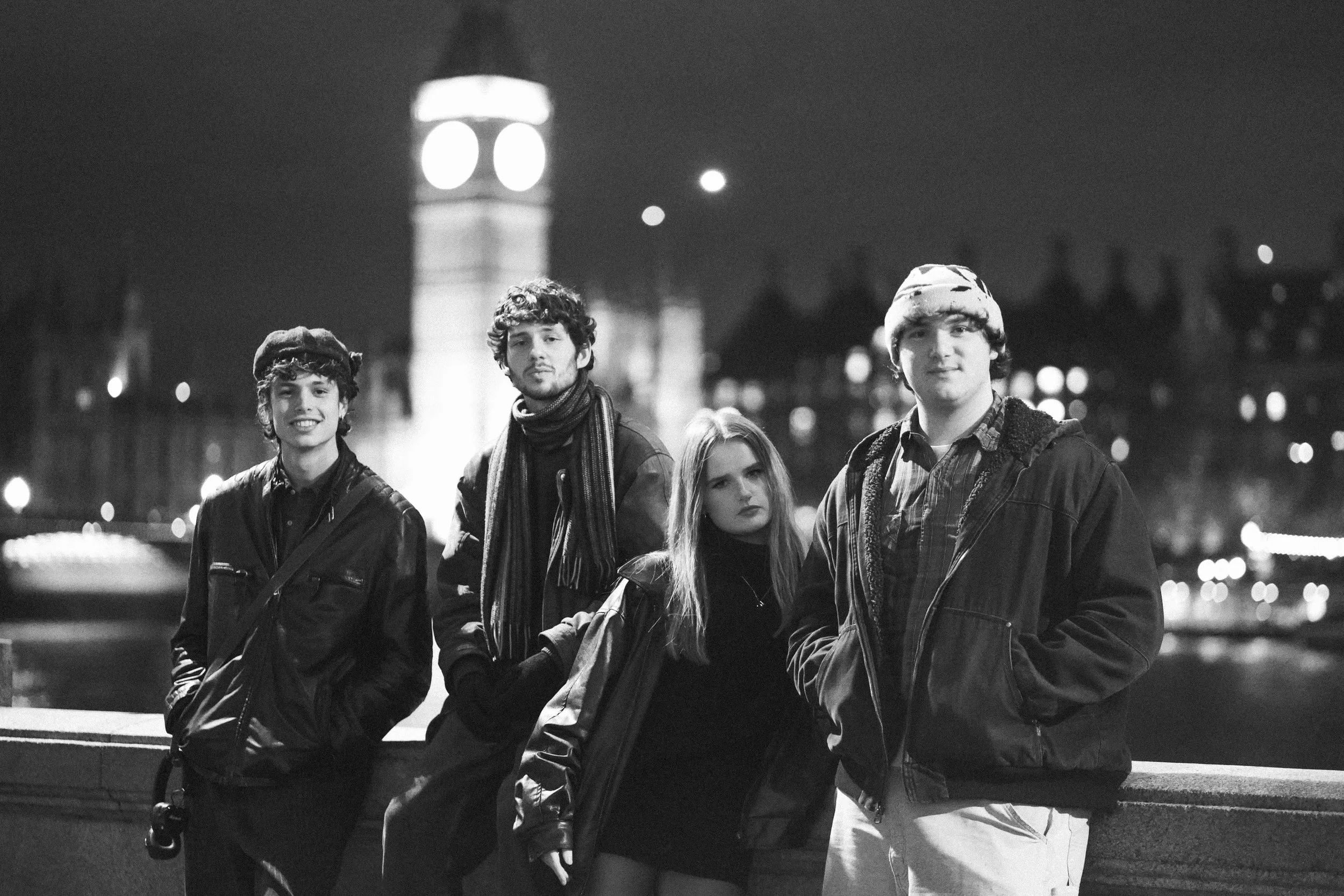
flo wilkes and why live music is the future
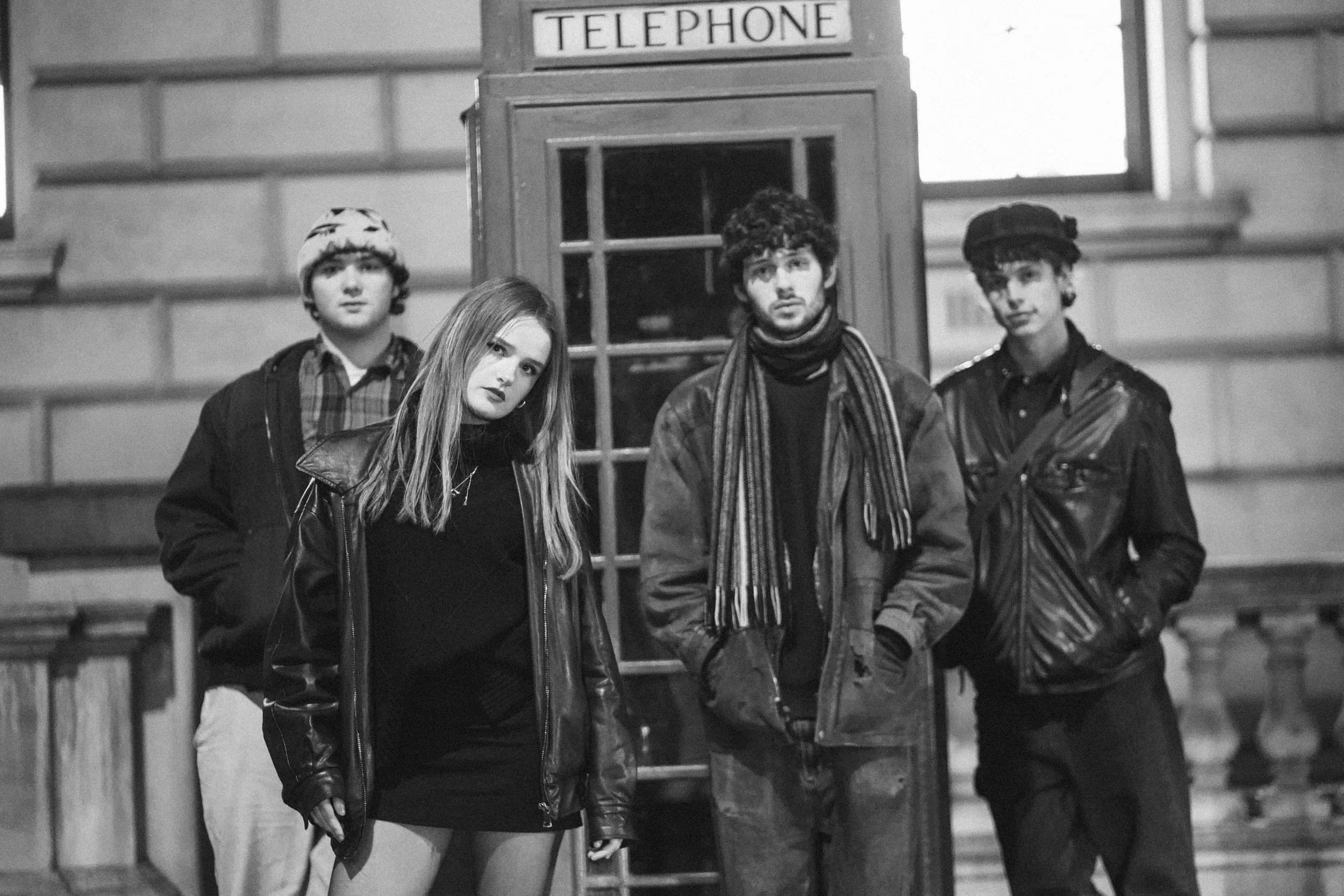
photos by @noorandhercamera
Flo Wilkes knows the music industry well. It's shaped her friendships, her identity, and most of her coming-of-age. The London-based singer-songwriter and frontperson has been performing since she was nine years old, which means she's spent more of her life onstage than off it.
Now leading her band through London's live music scene, their sound is somewhere between indie-pop and rock, carried by emotional songs that hit you right in the chest. Her singles "Hopeless" and "Sober" have us completely obsessed. But what really sets Flo Wilkes apart isn't just the music, but the way she shows up honestly, and without pretense. Protective of human connection and deeply aware of how brutal the industry can be for young artists, her band talks about the importance of passion and dedication in a competive industry.
In this conversation, Flo sits down with bandmates Freddie, Tom, and Marley (James, unfortunately, couldn't make it) to open up about the reality behind the scenes, and why live music still feels like the last place where everything makes sense. It's less about chasing a polished image of success, and more about holding onto the exact reason you started in the first place. As Tom puts it: “As long as you give it everything you have, you're golden.”
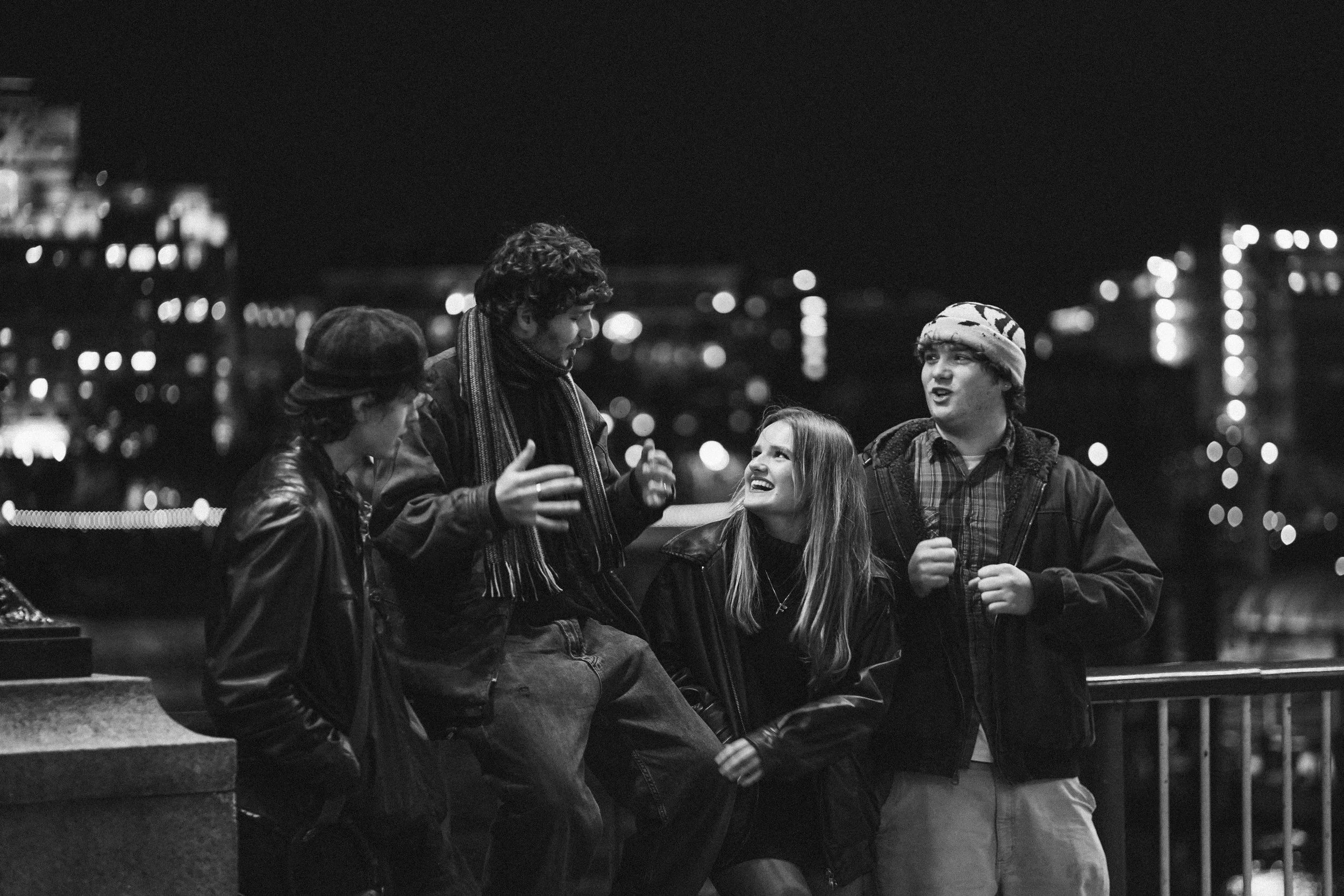
Okay, to start, three words from each of you to describe the London music scene?
Flo: I would honestly say, for me, I think it's very hypocritical. I think it's rewarding, sparse, and also fake. I think there are so many promoters that don't actually want the best for you, and they absolutely infiltrate London and ruin everything. You really have to fight to find the right music spots, the right people, and the right promoters.
Freddie: I would say opportunistic. I was going to say sparse as well.
Flo: I think everyone thinks London's booming for music-
Freddie: I'd say overrated actually.
Flo: More venues are shutting down by the day.
Freddie: It's also more specialised. There are a lot of venues clearly promoting certain types of music, and that's detracting from other types.
Tom: I'd say multicultural. Amazing, and broken. A lot of places undermine the amount of money things cost within the industry, within live, recording, everything. Young musicians, like ourselves, can be taken advantage of. You can thrive in the scene and still not make a living.
Marley: I want to say tight-knit, but at the same time it's not. There are pockets that are tight-knit, and pockets that are not. Despite what people say, there are a lot of welcoming faces in music at all levels. Sometimes it's not the case, but more often than not, people are happy to help you. Wherever you are, especially at grassroots level.
Flo: I think dynamic is the perfect word. There's such an absolutely crazy range. There are producers who I work with now who are talented and absolutely lovely, and there are producers who I've worked with who aren't as good, yet think they walk on water. The most important thing I'm taking away from the London music scene is be kind to everyone you meet.
Tom: The two things, whether you're a singer, or an instrumentalist, or a producer, whatever. Hone your craft and work on it towards being amazing at what you do, and two, just be a good person. You have to be focused, dedicated, and love what you do, and appreciate the people around you doing the same thing.
Do you find that the music group is small enough that you see the same people over and over at gigs?
Marley: Yes, but only in parts. There are select scenes. The jazz fusion scene in London is quite tight, but I wouldn't see those faces at the gigs we play. Different scenes, different faces. Within individual scenes, you see the same people, and it's a lovely thing.
Flo: I think it also depends on how social you are and how much you network as an artist, because there were artists that came up to us at Isle of Wight that we knew just from knowing them previously. Or Natalie Shay, who went on a couple slots after us, we knew each other.
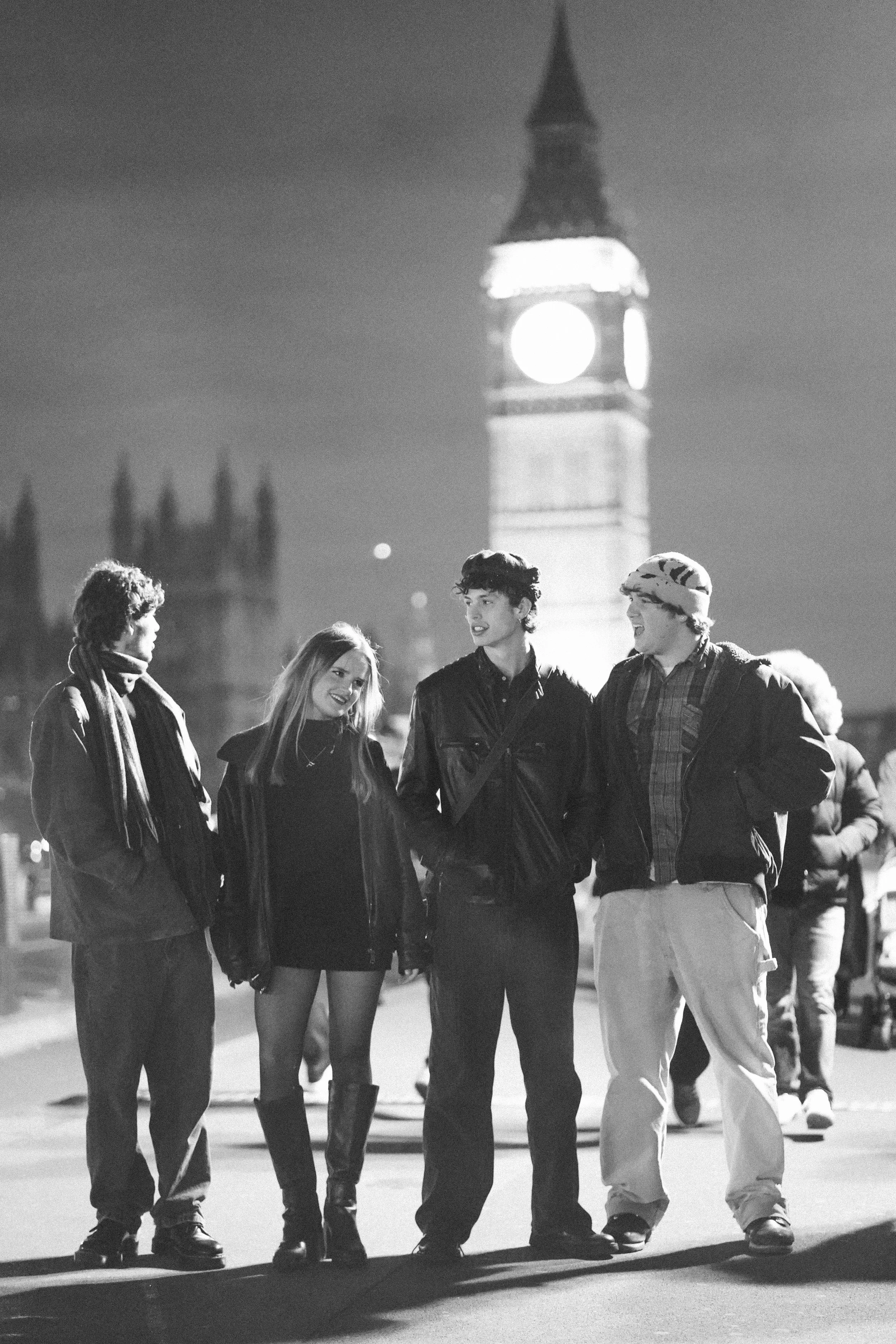
Do you find it difficult to balance the creative musical side alongside management, and publicity, and marketing your own content?
Flo: It's really challenging, honestly, because you can never switch that part of your brain off. Like, every single song that I write, I have to think about, is it going to sound good live? Because most of my brand right now is based on live music. So I'm, like, writing a song and if I don't think it's going to sound good live, or if I don't think it's going to go well down on social media, then I'm not going to do it.
But then also you're trying to balance not losing your own authenticity. It's actually why having a band is really, really helpful, because I'll come to them and be like, "Hey, I have this song, what do we think?" And then when everyone really likes it, then I'm like, solid, now I can put lots of effort into this. You want to be an artist. You don't want to be an influencer.
You started performing young, and you're still young artists. How is your experience shaped by that?
Flo: Me, Freddie, and James all started playing together ten years ago. So I think actually it's really, really helped a lot because it means we got sheltered from a lot of the really bad starting-out-in-the-music-industry stuff, because we got trained on how to give a good performance so early on, and what different venues expect, and soundcheck etiquette, and really basic things.
Freddie: It's been great from a young age. And not even just for music as well, because you've done theatre since you were younger as well. I did music from AS level, but you still perform now, right? So I think remembering other aspects of that is just not having, like, the nerves of the first few times on stage pass, because now it's just like, "Oh, another gig's coming up, cool, that's going to be fun."
Flo: It's just something that I'm very grateful for, to have been able to grow up around music and have it alongside uni as well, because it definitely is my life. Like, 80% of my identity is music. No, 100% of my identity is music.
Tom: As it should be.
Flo: So I think it's just been really great to have the really good parts, because obviously we've grown up together. Me, Freddie, and James, it's been like best friends growing up, doing what we love, which is more than anyone can ask for.
Marley: We (Marley and Tom) went to school together as well, so college, 16 to 18 together. I think it was kind of hand in hand for me. I've been playing guitar for a long time, and I know Tom has as well. Without trying to make it too personal, I was kind of pushed away from it a little bit in my earlier teen years. Not directly, but it wasn't "cool," you know. So I slowed down a little bit. I caved under social pressure. But barring those two or three years, I've always loved it. It's always been the thing I wanted to do. That hasn't changed.
Tom: Music's always been the biggest part of my life. I started playing when I was five. I did ukulele, then classical guitar, then jazz guitar, and it's been consistent ever since. I know what you said about social pressure. For me, every day in secondary school, every lunchtime, I'd go to the music rooms to play. I'd play anything on my own the whole time because I knew I wanted one thing early, and I wasn't going to get distracted. I knew I wanted that one thing, and I was going to give that everything.
As soon as we came out of secondary school, we both found East London Arts and Music, which is much like BRIT school, in the sense of doing creative outlets rather than traditional academics. That really opened us up to new experiences, new people, and new genres.
Marley: A lot of what people get out of going to uni for music is that you are paired to a network, and I was fortunate to get that at 16. Most of the people I still play with are people I met at college, which I'm so fortunate for. It was a really good place to start.
Flo: I completely agree with both of you. Something you said reminded me, I don't know how much you guys were made fun of at school for music.
(a resounding response of yeses)
Flo: I definitely was. I think there's a line where you choose whether you're doing it professionally or just for fun, and that's around 16 or 17. It's that moment of, "Oh, I was just doing that for fun, I'm going to go to uni and become an investment banker now" versus, "No, I'm taking this seriously."
Marley: People change, and college helps you realise whether it's for you.
Freddie: Sort of like the grass is greener perspective. Yeah, when you're only doing one thing, you start waiting on it. Having another perspective helps.
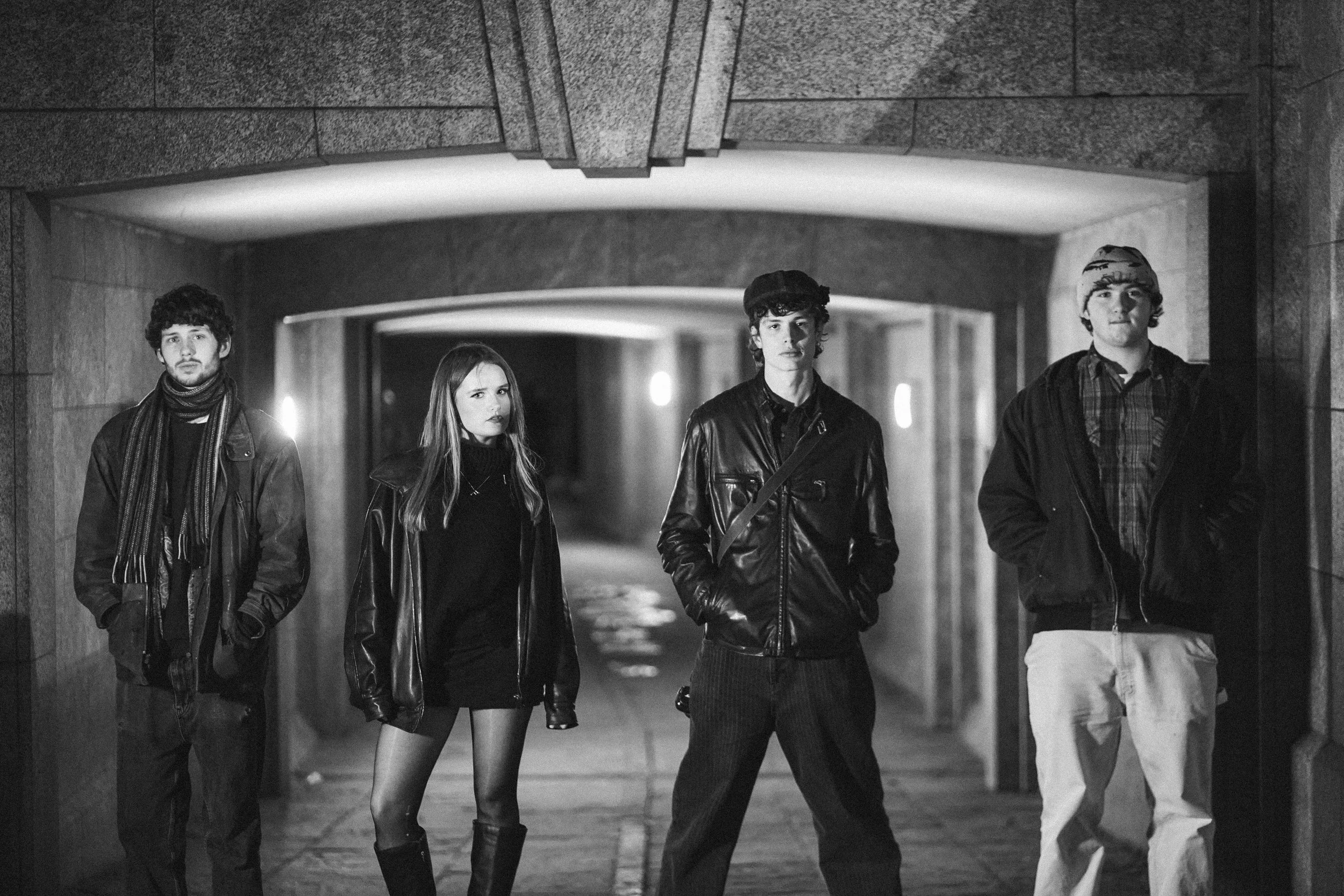
Your sound blends indie pop and rock influences. How would you describe your music, and who influences the sound of your music?
Flo: I'm always really bad at this question. I think yesterday we were all, like, pop rock indie fusion. I have different inspirations for every single part of it.
For my voice and the way I like to sing, it's the singer Sil. She's just got a wicked stage presence. She's got a little bit of rasp with her, but also, I enunciate my words quite well because of musical theater, so it's like that sort of balance. But definitely Sil for vocals. Lyricism, Sabrina Carpenter, crossed with like Gracie Abrams, and Madison Beer. They've always been my, like, three, like, the lyrics really hit me really hard with that. But it's been changing a little more recently because also, I think the way that we perform live is very different to all of those artists. We're much more indie rock live. It’s difficult when I get this question because, well it’s like, Flo Wilkes.
Freddie: I'd say a bit of a blend of all of our styles. We have a different style with each of our instruments, on the drums I’m rock-trained.
Flo: Marley's also got this jazzy fusion thing.
Freddie: Marley just does everything bro.
Flo: I think that's one of the most beautiful things about having a band where it's not, like, I love the creative process and the band practices because you can hear parts of all of us. All of our music taste in every song.
You've been gaining a lot more visibility in the live scene, what do you want people to take away from like a live concert?
Flo: I think the human connection in music is at serious risk of being lost, and I think one of the last hopes for it is live music.
Tom: Like AI, man. You can't have AI reproduce music, or AI lyrics.
Flo: TikTok marketing. People just want you to buy their songs, that sort of thing. I think the actual ownership and connection to music, one of the bridges towards that is live music.
Freddie: I think music is turning into a little bit of a production line. It's like more singles, longer albums, and releasing a song every month. Yeah, that's a trend every 10 days, just mold into that. I think that sort of like the individuality and the, as you said, the connection that you have with your own music is, it will be lost at some point if things keep happening, right? I'd say it's the most important thing.
Flo: One of the things that I love about music is the process, I love all the BTS, that sort of thing. I think in live music you actually get that raw value out of the music as well. It's not just the polished social media version.
Freddie: Production. Human connection.
Tom: Live music, why do people still go to live music? Why is it still so thriving? Because they feel they resonate with what the artist is saying, because it's a person. If it's not a person, it's just coming from AI or something else, they're not gonna feel the resonance.
Marley: I like to think the live side of the industry has a pretty promising future because it's how artists make their money these days, you know. So I think we're going to see a lot more tours and a lot more live albums.
Flo: God, it's so emotional when it's right in front of you.
Freddie: It's nice bringing together a huge group of people. It's like sort of one collective.
Flo: And it makes it feel real.
Freddie: And you get to hear Tom’s solos live.
Flo: The whole band is like a friendship group and it's like family.
Freddie: We hang outside of band things. It's definitely family first and band second. Yeah.
Tom: We could be a sitcom.
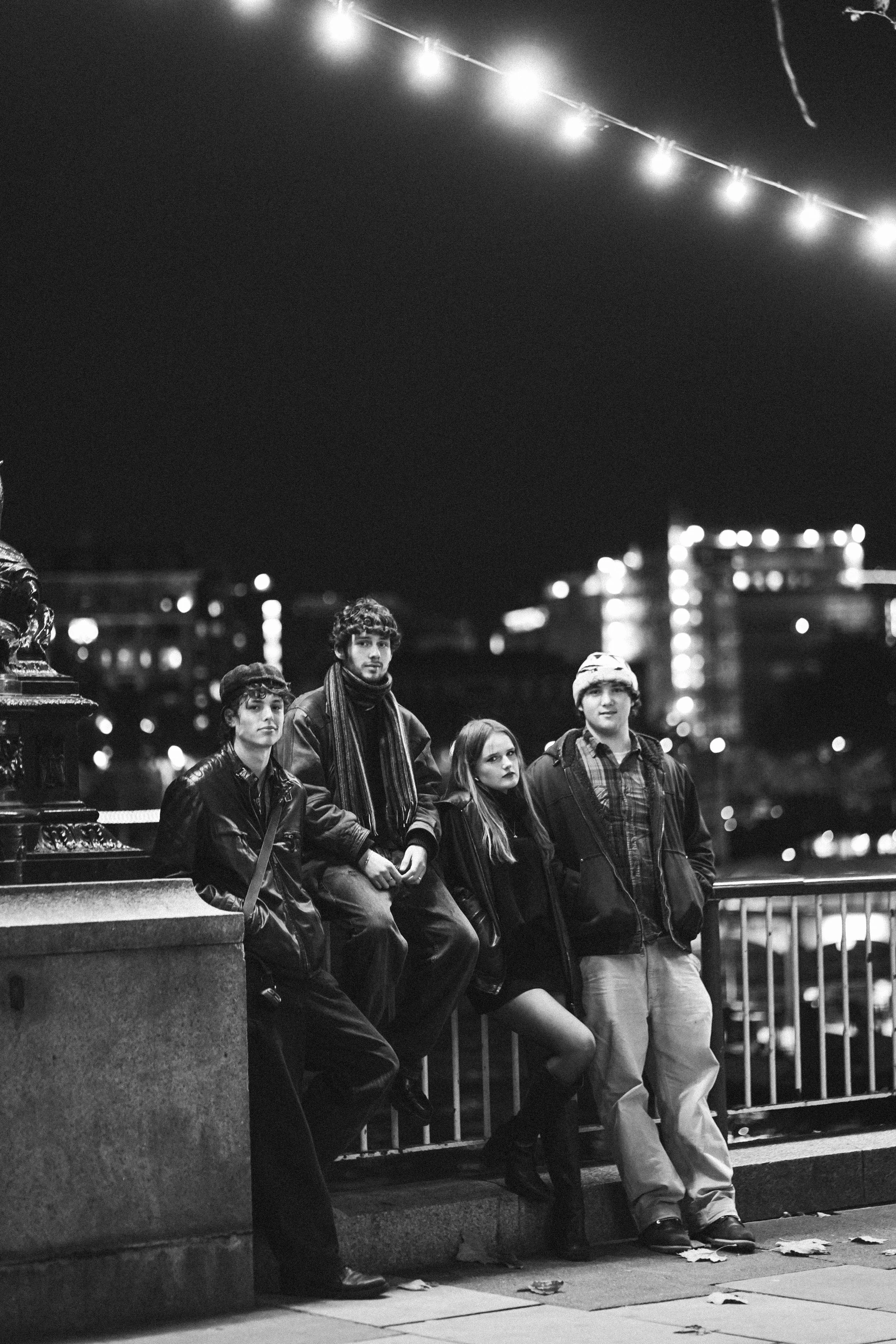
What's the next big artistic milestone you're aiming for?
Freddie: Wembley.
Tom: Support tour.
Flo: I think a support tour would be the best thing. Whether we're headlining or supporting it, that would be the dream, I think.
Freddie: Like a BBC Introducing stage at Reading. Yeah, like a really big festival slot. BBC, if you're listening.
Dream venue or festival?
Flo: Are you gonna say Wembley again? I think I would love to play the River stage at Isle of Wight, that looks awesome.
Freddie: I'd say, yeah, River stage.
Tom: The dream is stadiums in Brazil. Because everyone would be dancing. But the way people have reacted in Brazil to any show that I've been watching on YouTube for like stadium shows is completely different than how it would be in the UK.
Flo: I think all of them, really big festivals, Glastonbury, Lollapalooza. I've always been obsessed with Hammersmith Apollo. Koko. Madison Square Garden.
Tom: Jazz Café! it's a beautiful, intimate venue.
Freddie: Anywhere with a good sound.
Favorite gig you've played so far?
Flo: Isle of Wight finals at Bush Hall. I loved Bush Hall. The Camden Assembly headline was also really good. I think it just feels we've made so much progress since the Camden Assembly, and I think about the standard and I think about how much better we are now.
Discover Live with Jodie Bryant. I felt like a performer. We were headlining it too. And I didn't have one bad thing to say by the end of it.
Tom: Like, it sounded great. The stage was great. The crowd was great. The sound was great. Everything felt so real. I think part of the reason as well why obviously I look back and Bush Hall so much is happening is because we won, but also, it just felt so surreal. Every single moment of it and I looked back on videos and I still am in shock at the amount of people that came out to support.
Flo: I didn’t expect to win, like I was fully expecting to hear someone else's name.
Marley: And there was that food spot next door.

Something you've learned about yourself being in in the band, and then a piece of advice you'd give yourself when you first started?
Flo: I've learned about myself, and how much I actually rely on people. Now I'm like, yes, band practice with my best friends and we're just going to like, have fun and not worry about the standard because like, we've already worked so hard, all of this year to make sure that everything sounds really, really good, and polished.
If I was giving myself advice, I would say just never stop pushing, like, just literally never stop pushing. I think that's the advice that I always got given. It's the reason why I keep going. I think getting that, like, validation or, like, positive messages from other people is part of the reason why you don't stop, because it's such a tough industry. You really need the power to keep going on.
Freddie: What I've learned about myself, I think, is that I need to be less sort of, I want to use the word stuck up, but I think when I first started doing music with you, we'd butt heads somewhere because this wasn't my genre of music that I listened to ever. And I think I've learned now that the opportunities that I now get because of doing music with you to perform these sold out shows is such a special thing. It's such a cool thing to be a part of. Just be more open, because people's taste changes all the time. Massively. And opportunities will come in all forms. Love it, in any genre.
Tom: Mine's a bit less deep. It's shut up. You feel nervous. Shut up, do it. You can't compare yourself. It's the easiest thing to do is compare yourself. You see someone who's up there, does a crazy solo, and you think, oh man, they're amazing compared to you. And it's so easy to compare yourself, so easy to be scared. That's the thing that gets you down the most. You're never going to succeed unless you're confident in yourself and just be like, all right, you're a bit shit, fuck it. Just give it a go. If it goes wrong, so what? As long as you give it everything you have, you're golden. Shut up. Get on with it. And do what you love.
Freddie: That's really strong advice. Shut up.
Tom: Just shut up and go for it. This is what you want more than anything in the world. You're gonna shut up and go through it with every ounce of passion you have.
Marley: I think I've learned refinement. I started playing with Flo in January, and it's been the first set of gigs that have been consistent. It's been really nice to have amazing people and amazing gigs, where I can learn from previous gigs rather than just rehearsals. Playing a gig and knowing you have one three weeks later with the same act and songs is really useful. It helps you notice mistakes, notice where you're comfortable in rehearsals and less comfortable on stage, and try to flatten that out. I've really loved them with these guys. It's fun.
For advice to my younger self, be proud. If I could go back, I'd definitely play more than I did.
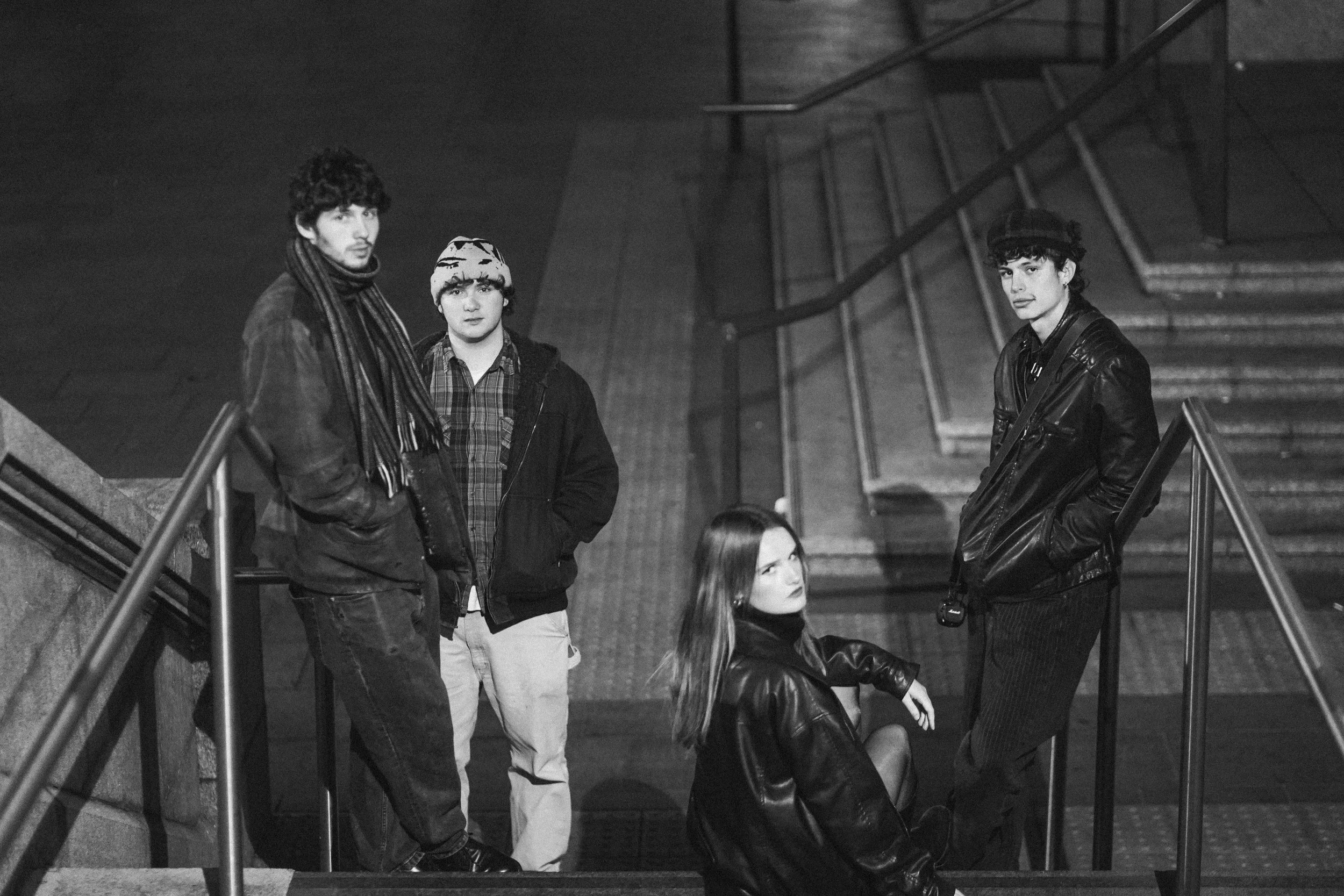
Final question… where do you see yourself in a year?
Flo: I think I'm naturally quite a pessimistic, although realistic person. So it's like, where do I see myself? It's like, why do I hope to see myself? Because if I told myself a year ago where we were today… So I feel like I'm never gonna know what exactly I see, but I know what I hope for, and it's, like support tours and festivals, and being able to do the exact same thing to an even higher standard with so much more. I think that's what I aim for.
What about you guys?
Marley: I think and hope it will be the same lineup. Same people. Still gigs. I don't know if there's going to be new material, there probably will be. It's going to be a year. Still enjoying it as much as I have now, as much as we are now.
Flo: I don't want this band to ever change. Flo Wilkes has only existed as a band since February 2024. And this is the eighth band combination. Which is really promising.
I feel like one of the things that I really didn't like at the beginning of, like, the whole Flo Wilkes thing was like, I felt so alone in all of the music struggles, and I felt like, oh, like, my band members are just here because I feel like they have to be. So I feel like that was why, when we won the quarterfinals, that was, like a very clear, like, shift to me. Then it felt like everyone wanted.
Freddie: There was a collective goal.
Flo: I didn't feel it until February this year. Which is a year after, so it takes time. Trust the process.